
JSON to Swift Model Generator
Generate nested Swift model definitions from a JSON example. Review the inferred fields, then copy or download the source.
Open toolTurn a JSON object or object array into Kotlin data classes. Inspect nested models, property names and nullable fields, then copy or download Models.kt for your project.
Enter the inputs, then select Generate Kotlin.
Result will appear here
The JSON to Kotlin generator infers sample types with quicktype and emits data classes in its types-only configuration.
The source uses the models package and can include nested data classes, nullable properties and a collection type alias for an object-array input. String values are not turned into inferred enum types. Serialization annotations and parsing helpers are not supplied by this configuration.
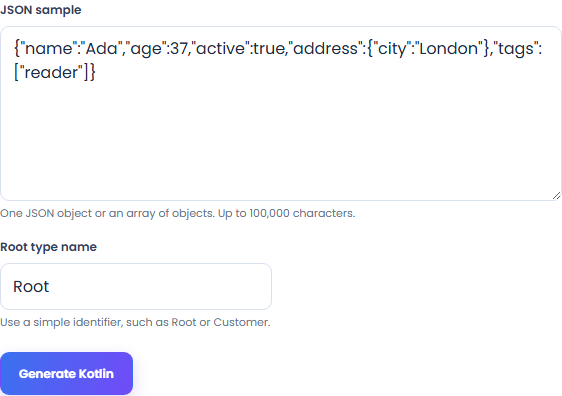
Paste a representative JSON object or object array and choose a root type name before generating the Kotlin definitions.
Include nested objects, arrays, missing fields and null values that occur in real sample records. Use an object or nonempty object array and enter the root type name in its separate field.
Run Generate Kotlin and review each data class and property type. Check nullable properties and any root collection alias against the shape of the JSON you supplied.
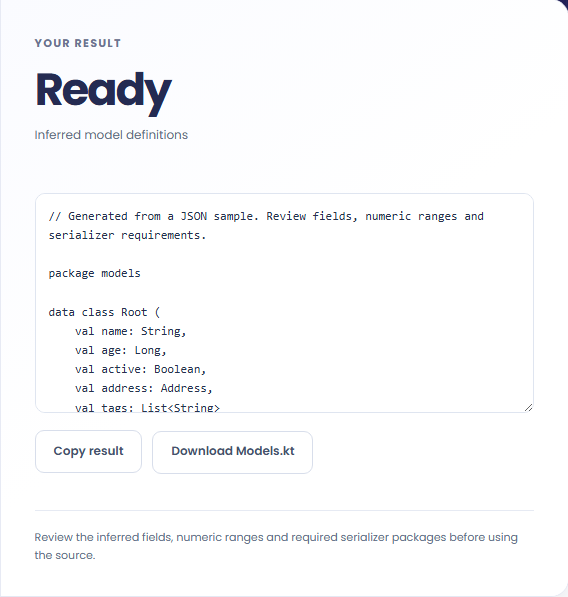
Copy the source or download Models.kt. Review the models package declaration, nullable fields and property names, then adapt and test the serialization setup your project uses.
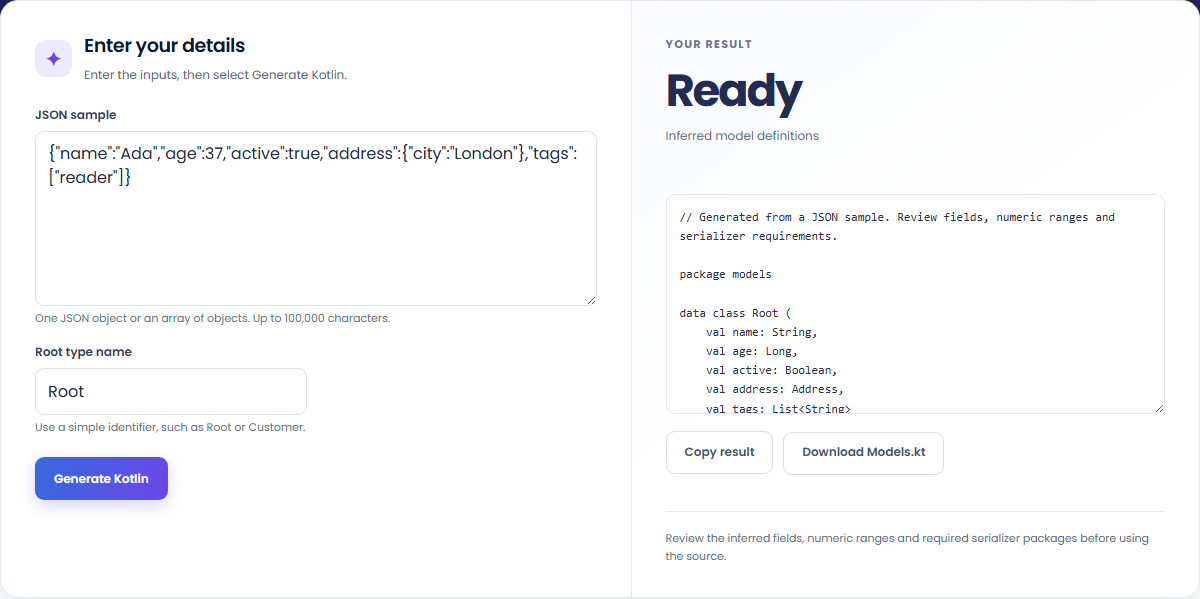
Start Kotlin definitions from representative data, then check the source in your project.
Use a representative response to start Kotlin model definitions. Compare every field and permitted type with the actual API contract before treating the sample model as complete.

Supply an array containing representative variations so omitted or null fields can affect inference. Include real array elements when the element type matters; an empty array cannot establish that type.
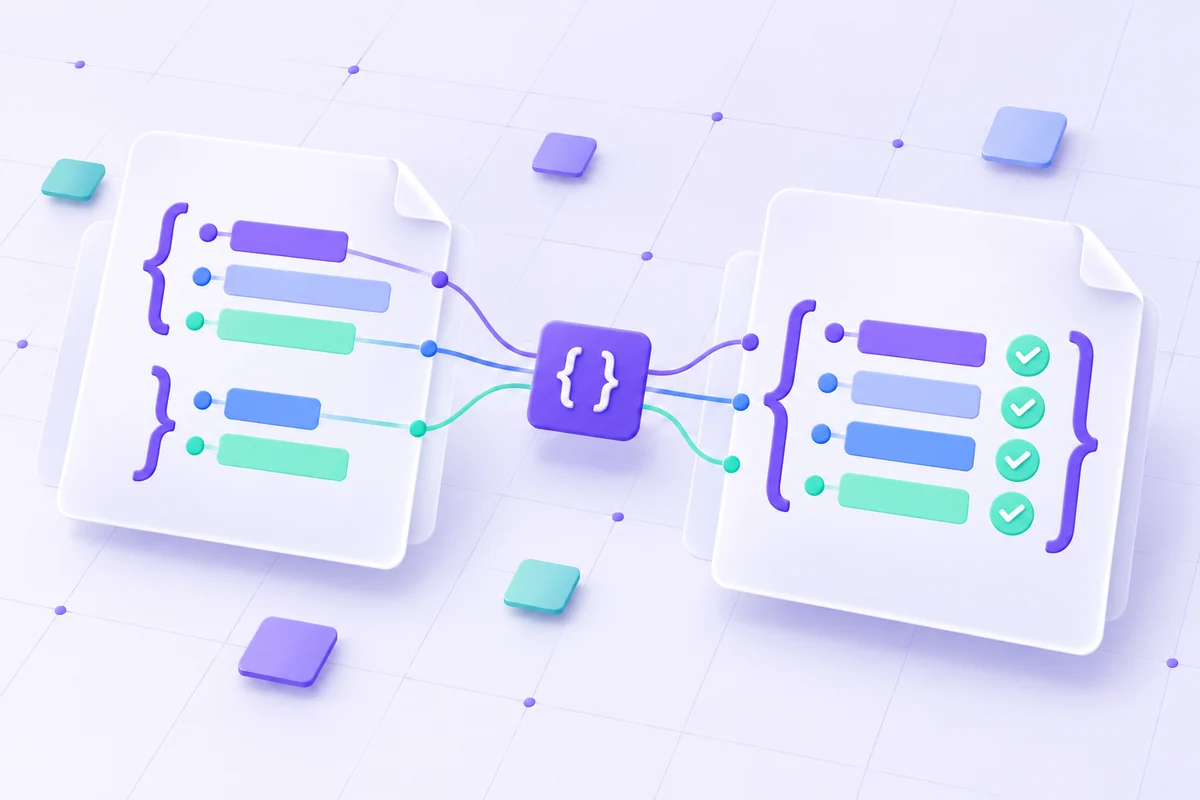
Compare Kotlin property names with the original JSON keys and inspect nullable types such as Long?. Confirm how your selected serializer maps keys and handles missing values; these types-only classes do not include serializer annotations.
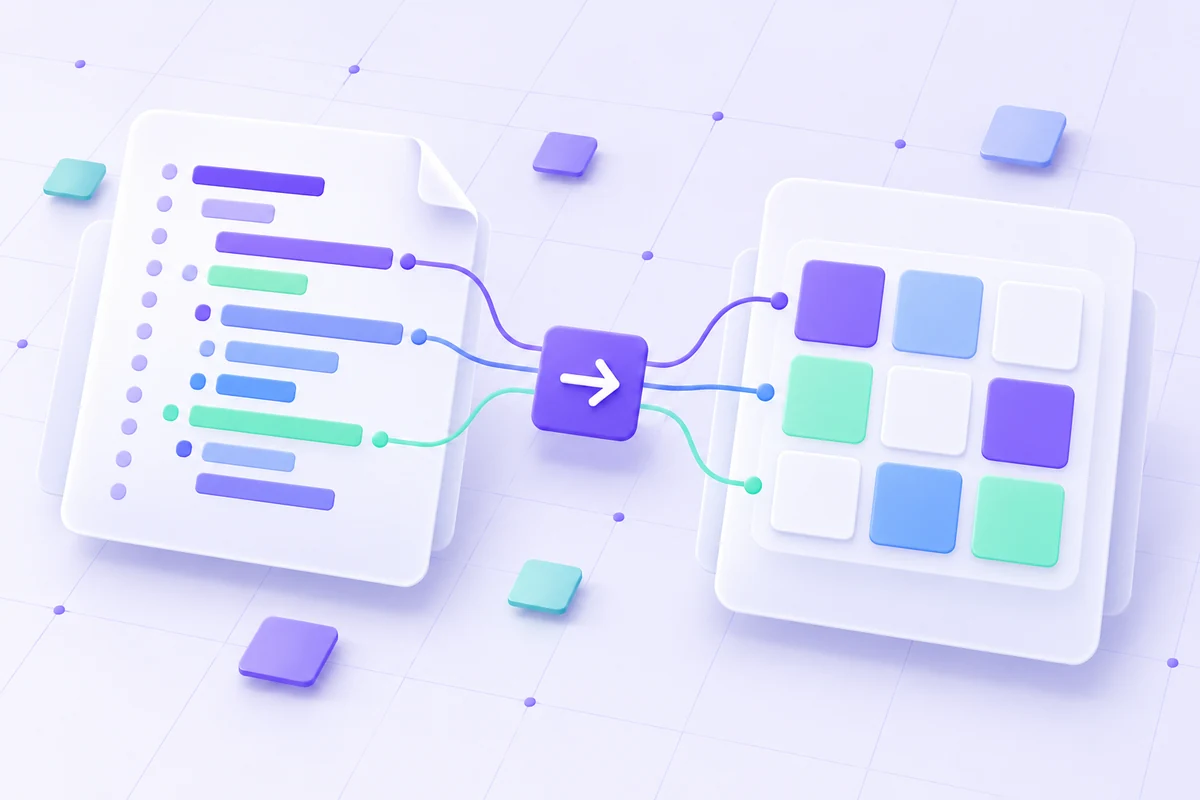
Compare each property and collection type with representative JSON records before integration.
Missing or null sample values can lead to nullable properties with null defaults, while nested objects create additional data classes. An object-array input can include a collection type alias. These declarations describe sampled shapes; they do not establish every allowed API value or provide a complete deserializer.

Keep the generated type declarations with the contract and serialization rules your application uses.
Input must be one JSON object or a nonempty object array within 100,000 characters. The root name begins with a letter, uses supported ASCII identifier characters and has at most 40 characters; reserved names are rejected.
Review the package declaration, numeric ranges, nullable fields and JSON key mapping. Add the serializer configuration or annotations your project requires and compile it there. The browser does not install a serialization library or test Kotlin execution.
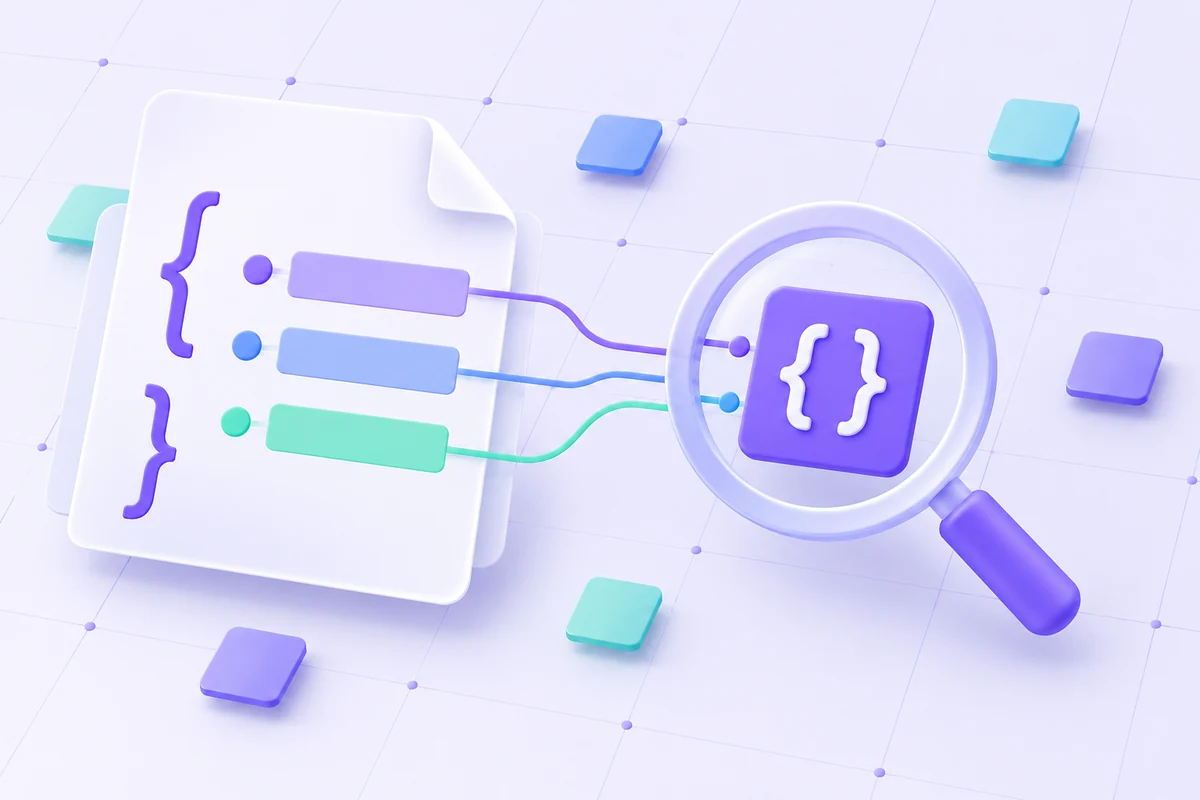
Generate nested Swift model definitions from a JSON example. Review the inferred fields, then copy or download the source.
Open tool
Infer a draft-07 JSON Schema from a sample object or object array, then review it before using it as a contract.
Open tool
Validate JSON against a draft-07 or 2020-12 schema. Review error paths without sending the documents to a server.
Open toolChoose another tool for your next calculation, conversion, or text task.
Write Markdown, update the rendered preview and download the Markdown or HTML when it is ready.
Open tool
Compare two JSON values by structure. See changed paths without treating object key order as a difference.
Open tool
Check CSV quoting and consistent column counts, then review the record count and selected delimiter.
Open tool
Create a newly encoded PNG, JPEG or WebP from a local image and remove its original embedded metadata.
Open toolPaste representative records and review the inferred properties, nullability and package before downloading the source.
Answers about using JSON to Kotlin Data Class Generator and understanding its results.
No. Fields and types are inferred from the sample. Review missing fields, null values and numeric ranges against your actual API contract.
Yes. Copy the generated definitions or download the source file, then review it in your project.