
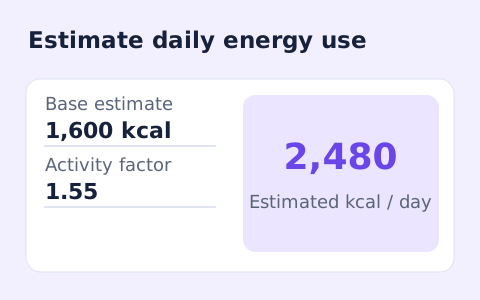
TDEE Calculator
Estimate resting energy expenditure and TDEE using the Mifflin–St Jeor equation and an activity factor.
Open toolCalculate adult body mass index (BMI) from weight in kilograms and height in centimetres. Read the value and category as a screening measure, not a diagnosis.
Update the inputs to see your result.
Result will appear here
Weight is related to squared height before the adult category is selected.
The calculator converts centimetres to metres, then divides weight in kilograms by squared height. It selects the adult category from the unrounded value before formatting the main answer.
BMI is a screening measure for adults aged 20 and over. It does not diagnose health or account for body composition. Children's BMI needs age and sex specific interpretation.
Reference: CDC: Calculating BMI.
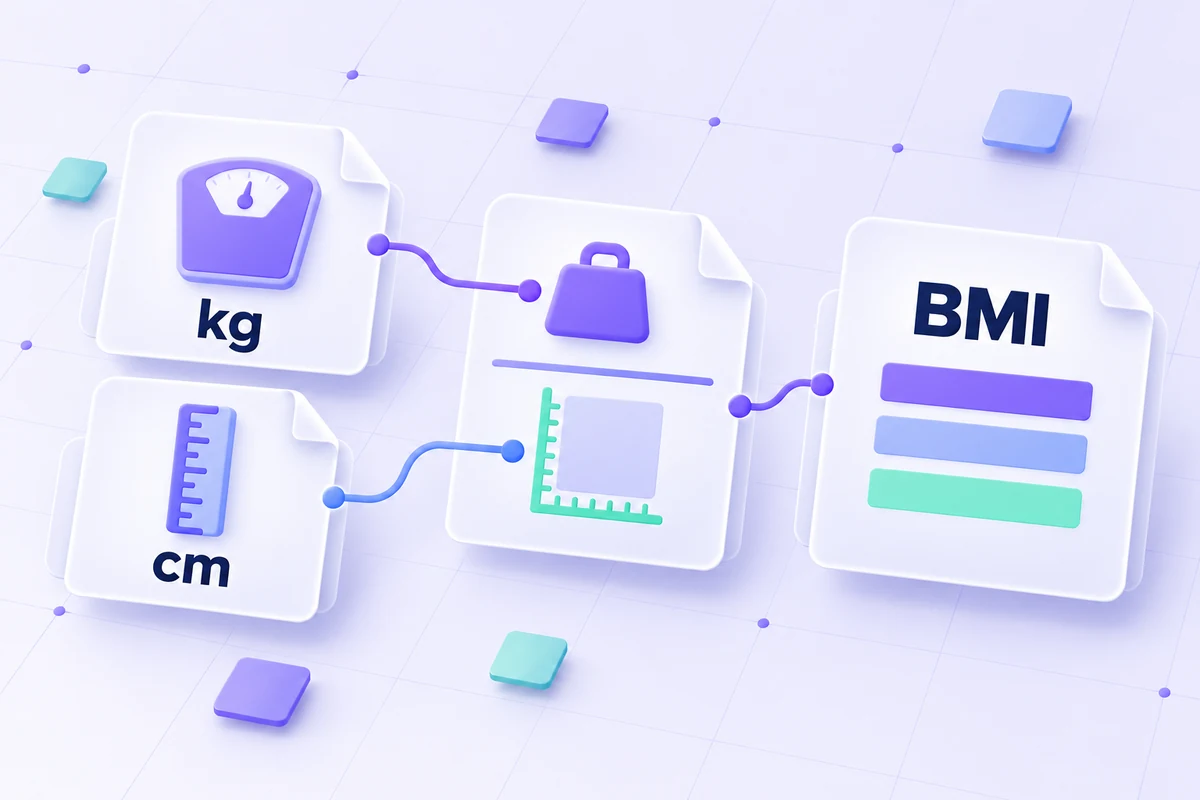
The two measurement fields use kilograms and centimetres. Convert other units before entering them.
Enter weight in kilograms and height in centimetres as numeric values. Convert pounds or metres before filling the form, and keep the units with your measurements. The adult category does not use age-specific or body-composition inputs.
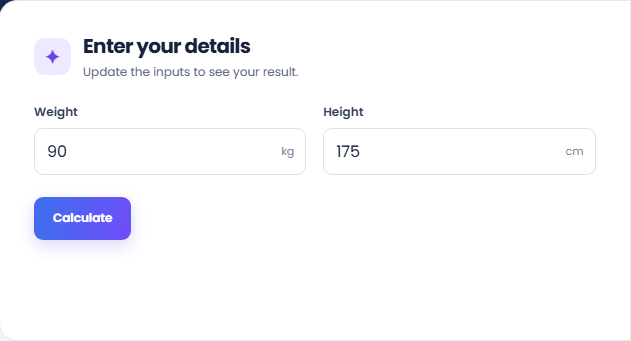
Select Calculate to review the BMI value and adult category. The tool converts height to metres before applying the formula. If a result looks unexpected, check both measurements rather than interpreting the number from the category alone.
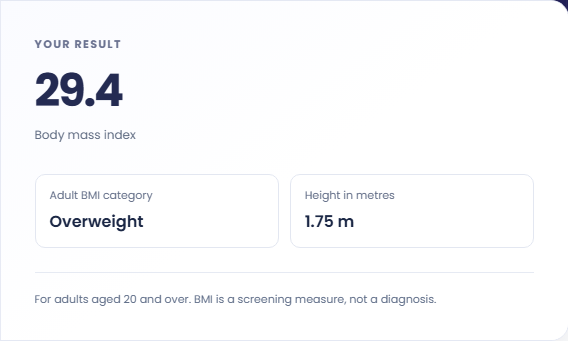
Read Height in metres beside the answer to confirm the unit conversion. The main value is rounded, while category selection uses the unrounded calculation. These categories apply to adults aged 20 and over and are a screening measure, not a diagnosis.
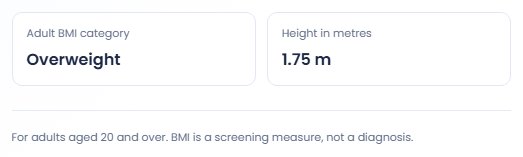
Use the calculation to understand the relationship between height and weight, within its adult screening scope.
A hypothetical adult weighing 70 kilograms at 175 centimetres gets a displayed BMI of 22.9. This simple example helps confirm that height has been entered in centimetres. It does not establish the health of a particular person.

If you are comparing recorded measurements, enter each pair separately and keep the height and weight beside each output. A difference in BMI can come from either input. The page does not store a history or explain a change.

Use an adult example to show why height affects BMI differently from weight. Change one input at a time and observe the result. Keep the explanation about the calculation itself rather than interpreting the number as an individual diagnosis.

Read the adult category with its rounding and screening limits in view.
The category is selected from the unrounded BMI value; the main number is rounded to one decimal place. Near a category boundary, a rounded display can hide a small difference in the underlying value.
This page uses adult categories for people aged 20 and over. Its inputs do not include body composition or medical history, and it cannot provide the age and sex interpretation needed for children.

Confirm measurement units before carrying the result into another context.
A blank field, an out of range measurement or a number containing unit text can prevent a result. Enter the numeric value in the displayed unit, then check the converted height shown below the main answer.
A plausible looking number still depends on the entered measurements. BMI is a screening measure; a clinician can assess health information that this form does not collect. Keep that limit with any result you share.

Estimate resting energy expenditure and TDEE using the Mifflin–St Jeor equation and an activity factor.
Open tool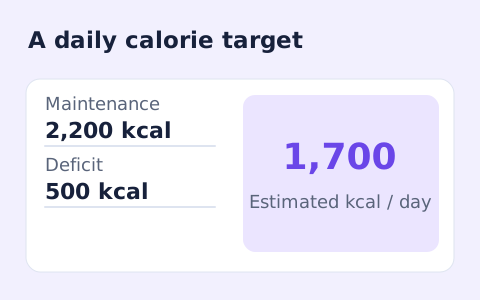
Estimate adult TDEE and a daily calorie target using body measurements, activity, and a chosen deficit.
Open tool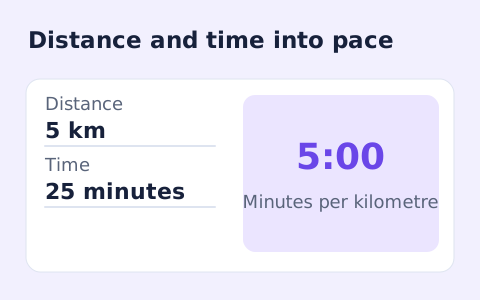
Calculate running pace per kilometre and per mile from a distance and elapsed time.
Open toolChoose another tool for your next calculation, conversion, or text task.
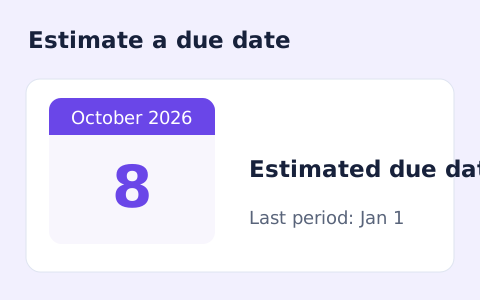
Estimate a pregnancy due date using the first day of the last menstrual period and cycle length.
Open tool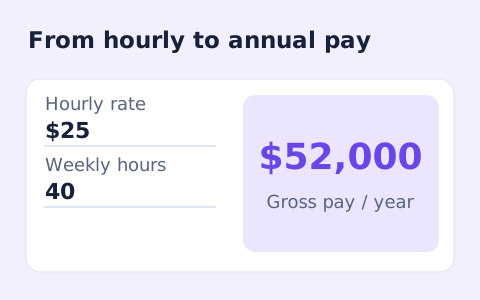
Convert hourly pay to gross annual, monthly, and weekly salary using your own working hours and weeks.
Open tool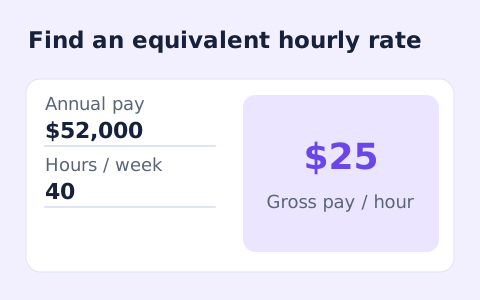
Convert annual gross salary into an hourly rate from your hours per week and paid weeks per year.
Open tool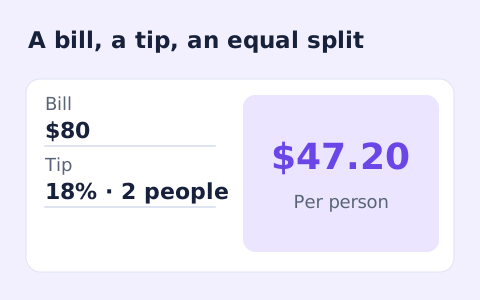
Quickly split a bill with a percentage tip. See the tip amount, total, and per-person amount.
Open toolCalculate adult BMI from weight in kilograms and height in centimetres.
Answers about using BMI Calculator Online and understanding its results.
The adult categories shown here are for people aged 20 and over.
Enter weight in kilograms and height in centimetres. The calculator converts centimetres to metres before applying the formula.
The displayed BMI is rounded to one decimal place. The category uses the unrounded calculation, so read the category and value together.
No. The calculation uses only height and weight. It does not measure body composition or establish an individual diagnosis.