
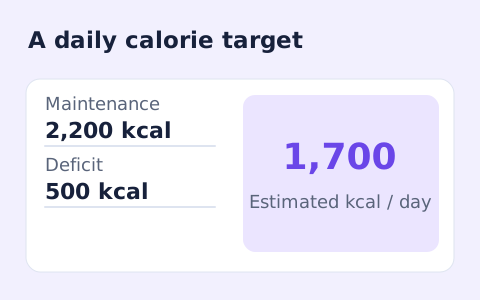
Calorie Deficit Calculator
Estimate adult TDEE and a daily calorie target using body measurements, activity, and a chosen deficit.
Open toolEstimate adult total daily energy expenditure (TDEE) from body measurements, an equation coefficient, and an activity factor. Compare resting and total energy within this educational model.
Update the inputs to see your result.
Result will appear here
A resting-energy equation is multiplied by the selected activity factor.
Weight, height, age, and the selected coefficient form a Mifflin–St Jeor resting-energy estimate. That estimate is multiplied by the selected activity factor to obtain the modelled TDEE.
For adults only. The equation and activity factor are rough population estimates, not a measured energy requirement or clinical advice. Not intended for pregnancy or children.
Reference: Mifflin et al.: Resting energy equation.
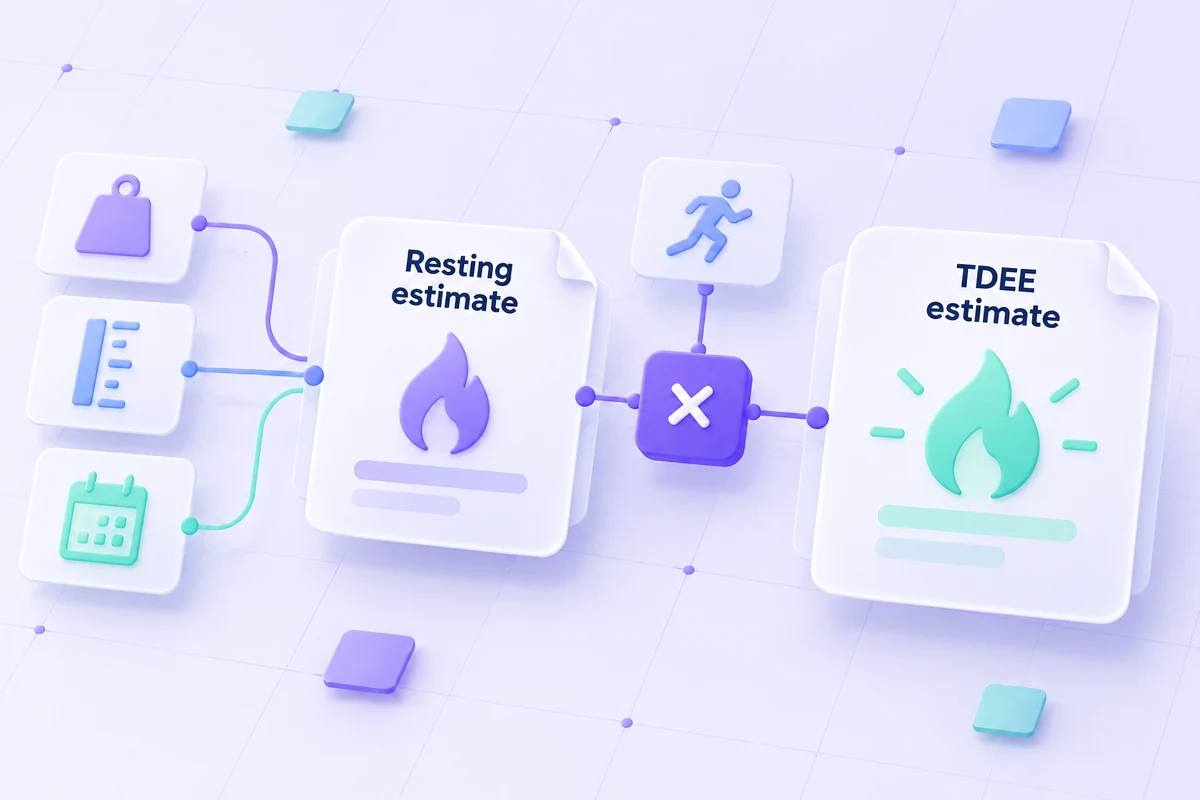
This adult estimate combines a resting energy equation with a selected activity multiplier.
Enter weight in kilograms, height in centimetres, and age, then choose the equation coefficient and activity factor. Keep units and assumptions visible. This form estimates an adult model and does not collect a metabolic measurement or prescribe an intake.
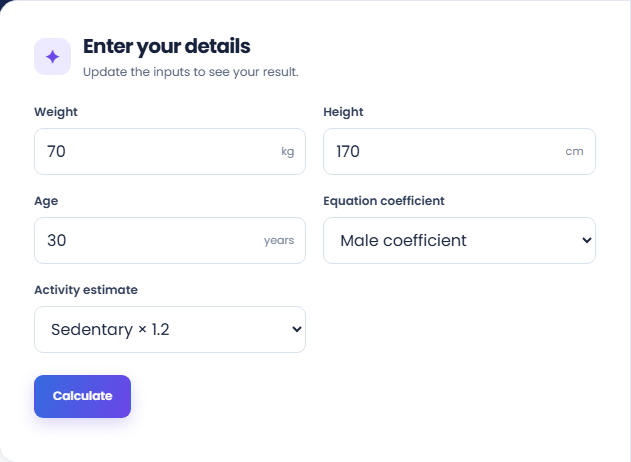
Select Calculate and read the estimated total daily energy expenditure. The page combines the measurement inputs into a resting estimate, then multiplies by the chosen activity factor. Changing that factor changes the total without measuring a different level of activity.
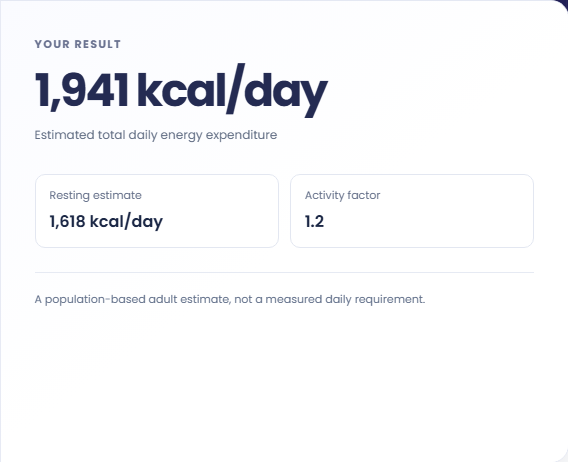
Read Resting estimate and Activity factor beside the main value. The total is rounded to whole kilocalories per day. Individual requirements can differ from this population-based model, which is not intended for pregnancy, children, or clinical nutrition decisions.
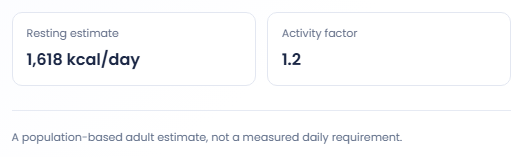
Use the result to understand model inputs rather than to make clinical nutrition decisions.
Keep measurements, age and coefficient fixed while selecting two activity factors. The total changes because the multiplier changes. This demonstrates the equation's sensitivity to that input without determining which factor describes an individual's actual activity or expenditure.

Compare the displayed resting estimate with the entered metric measurements and coefficient. A centimetre and metre mismatch changes the equation substantially. Reviewing units explains a calculation discrepancy without interpreting either number as an observed metabolic measurement.

If another educational estimate differs, compare the equation, coefficient and activity assumption before comparing the final numbers. Models with different inputs can produce different values. Agreement between estimates still does not provide an individual assessment of energy needs.

Keep the population estimate distinct from a measured individual requirement.
The resting value comes from the entered measurements, age and equation coefficient. The activity factor multiplies that value to form the main result. These two numbers describe separate stages of one estimate, with rounded values shown for readability.
The tool is for adults and is not intended for children or pregnancy. It cannot measure daily requirements or provide clinical advice. Individual circumstances can differ from the population equation represented by these fields.

Check metric inputs and adult scope before interpreting the model.
Recheck kilograms, centimetres, age and the selected coefficient if the estimate looks unexpected. The calculator does not infer these values from a profile. A valid input simply allows the equation to run; it does not validate suitability for an individual.
No food log, exercise file or clinical assessment is part of this tool. For health or nutrition decisions, seek individual guidance rather than treating the rounded estimate as a measured requirement or a recommended intake.

Estimate adult TDEE and a daily calorie target using body measurements, activity, and a chosen deficit.
Open tool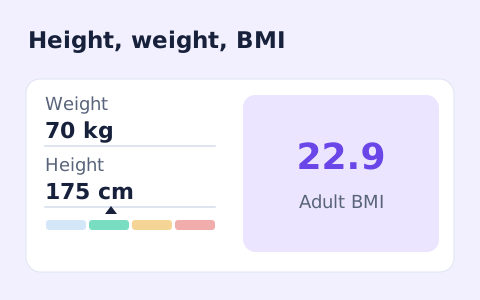
A free adult BMI calculator with metric inputs, a clear BMI category, and the calculation shown.
Open tool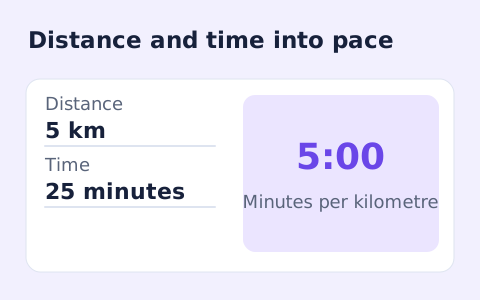
Calculate running pace per kilometre and per mile from a distance and elapsed time.
Open toolChoose another tool for your next calculation, conversion, or text task.
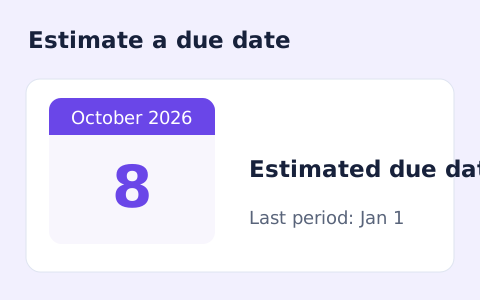
Estimate a pregnancy due date using the first day of the last menstrual period and cycle length.
Open tool
Convert hourly pay to gross annual, monthly, and weekly salary using your own working hours and weeks.
Open tool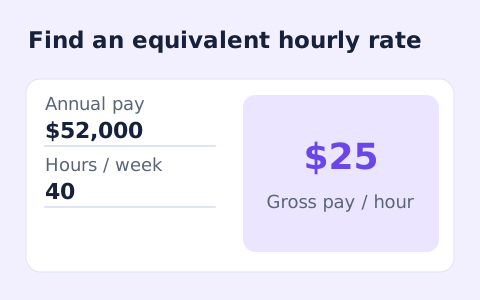
Convert annual gross salary into an hourly rate from your hours per week and paid weeks per year.
Open tool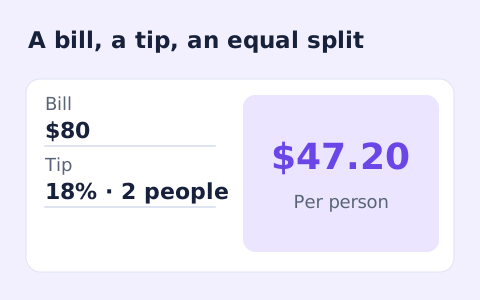
Quickly split a bill with a percentage tip. See the tip amount, total, and per-person amount.
Open toolExplore an adult TDEE estimate from body measurements, an equation coefficient, and an activity factor.
Answers about using TDEE Calculator and understanding its results.
TDEE scales estimated resting energy by an activity factor to approximate total daily energy needs.
No. Measured energy needs can differ substantially from this estimate.
No. It calculates from a population equation and an entered activity factor. It does not measure metabolism or physical activity.
No. The current page is an adult educational estimator and is not intended for pregnancy, children, or clinical nutrition decisions.