
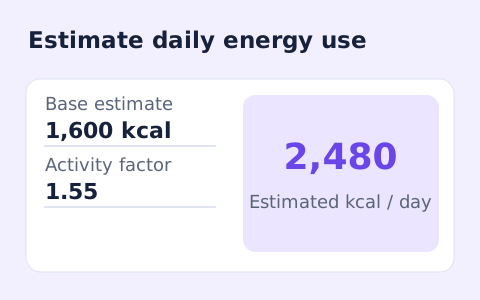
TDEE Calculator
Estimate resting energy expenditure and TDEE using the Mifflin–St Jeor equation and an activity factor.
Open toolEstimate adult maintenance calories and subtract your entered calorie deficit using body measurements and activity assumptions. This educational model is not a dietary prescription.
Update the inputs to see your result.
Result will appear here
An activity-scaled adult energy estimate is reduced by the entered deficit.
The Mifflin–St Jeor form combines weight, height, age, and the chosen coefficient to estimate resting energy. The activity factor scales that estimate; the entered deficit is then subtracted from the estimated maintenance amount.
An educational adult estimate, not a weight-loss prescription. Activity multipliers and individual energy needs vary. The page does not calculate targets below 1,000 kcal/day. Not intended for pregnancy, children, or clinical nutrition decisions.
Reference: NIH/NIDDK Body Weight Planner.
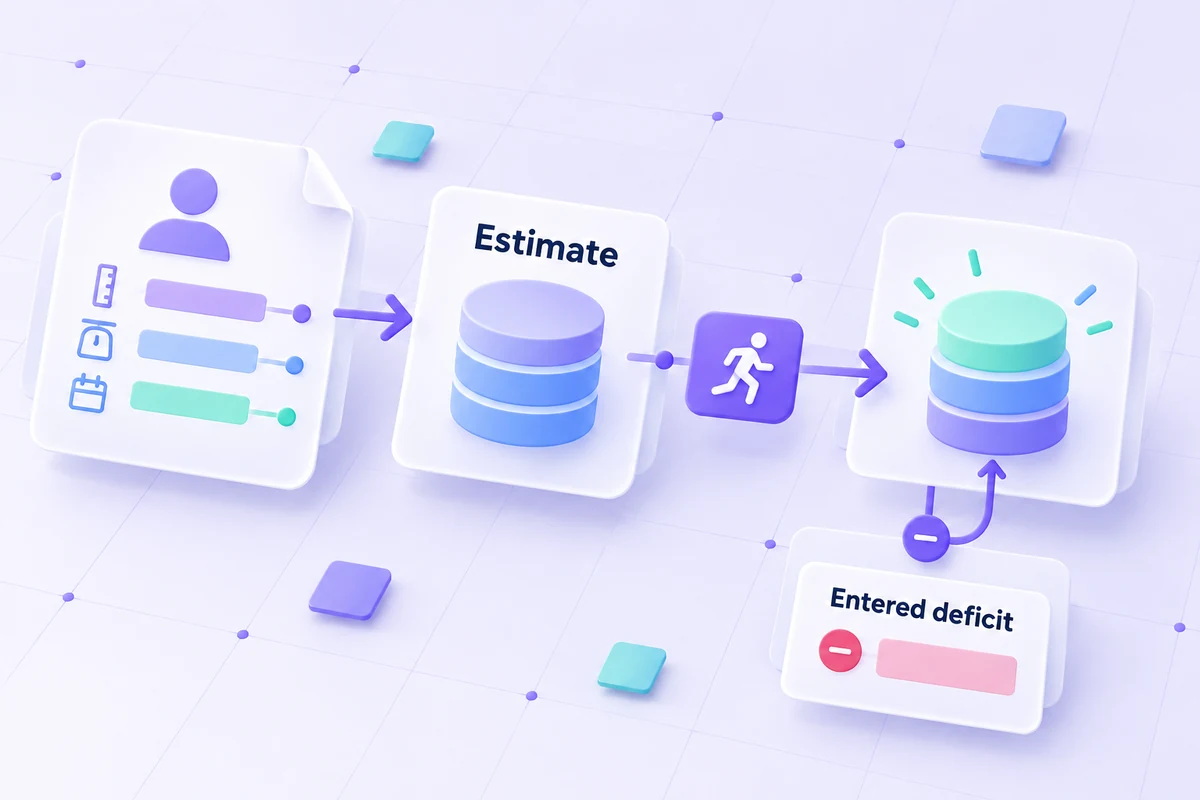
The inputs define an educational adult energy estimate and a separately entered deficit.
Enter weight in kilograms, height in centimetres, and adult age. Choose an equation coefficient and activity estimate, then enter the deficit to model. These are assumptions supplied to an educational calculation, not an individually recommended activity factor or deficit.
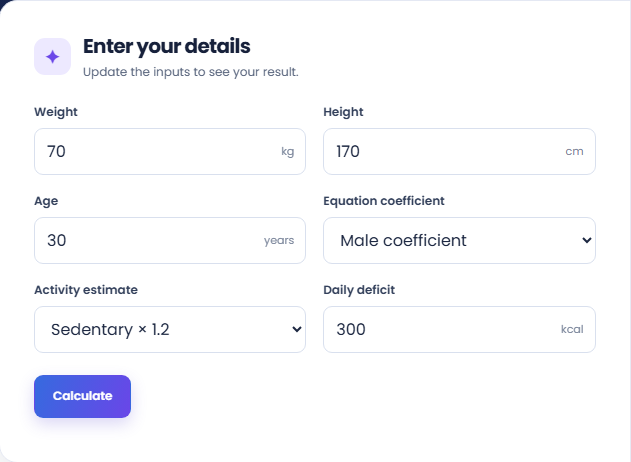
Select Calculate and read the estimated intake target. The page estimates resting energy, scales it by activity, and subtracts the entered deficit. It does not choose a deficit or predict weight change for an individual.
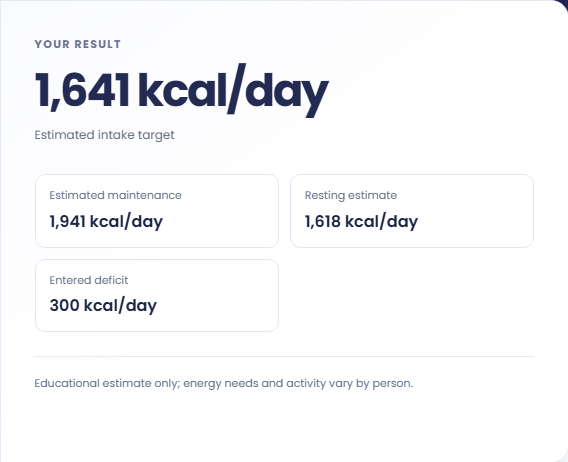
Review Estimated maintenance, Resting estimate, and Entered deficit together. The page rejects outputs below 1,000 kcal/day; that software guard is not a personal safety threshold. The model is not intended for pregnancy, children, or clinical nutrition decisions.
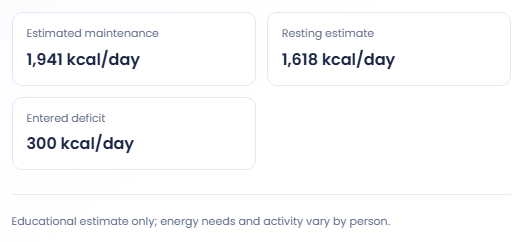
Use these comparisons to understand assumptions, without using the output as a weight loss prescription.
Review the resting estimate and maintenance estimate to see the effect of the selected activity factor. Then identify the entered deficit as a separate subtraction. This keeps the population equation and the user's chosen deficit from being mistaken for the same assumption.

Hold the measurements, age, coefficient and deficit fixed while changing only the activity factor. The difference describes that modelling choice. It does not show which activity category accurately measures a particular person's day or establish an intake recommendation.

If another educational calculator gives a different estimate, compare the entered units, equation coefficient, activity multiplier and deficit. Differences in those assumptions can explain the arithmetic. Neither matching numbers nor a permitted output establishes suitability for an individual.

Keep resting, maintenance, and deficit stages separate when reading the result.
Estimated maintenance comes from the resting equation and selected activity factor. The main result subtracts the entered deficit and rounds for display. Each component remains an estimate; the page does not predict weight change or a timeline.
This is for educational adult use and is not intended for children, pregnancy or clinical nutrition decisions. Individual energy needs and activity vary. A professional assessment can consider circumstances absent from these fields.

Review adult scope and input assumptions without treating a guard as a recommendation.
The page refuses to calculate a result below one thousand kilocalories per day. That software limit does not mean a displayed value above it is suitable or safe for a particular person. Do not treat validation as clinical approval.
Check kilograms, centimetres and the selected coefficient when an estimate looks unexpected. Seek individual guidance for nutrition decisions instead of adjusting entries merely to make the form accept a lower number. This tool does not prescribe a plan.

Estimate resting energy expenditure and TDEE using the Mifflin–St Jeor equation and an activity factor.
Open tool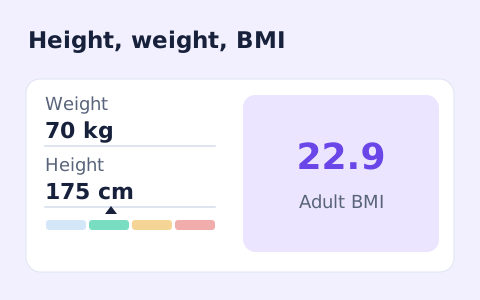
A free adult BMI calculator with metric inputs, a clear BMI category, and the calculation shown.
Open tool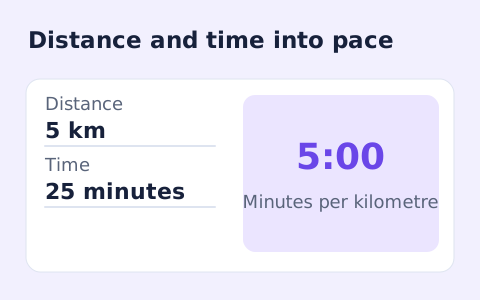
Calculate running pace per kilometre and per mile from a distance and elapsed time.
Open toolChoose another tool for your next calculation, conversion, or text task.
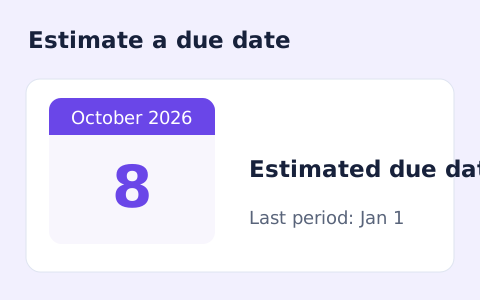
Estimate a pregnancy due date using the first day of the last menstrual period and cycle length.
Open tool
Convert hourly pay to gross annual, monthly, and weekly salary using your own working hours and weeks.
Open tool
Convert annual gross salary into an hourly rate from your hours per week and paid weeks per year.
Open tool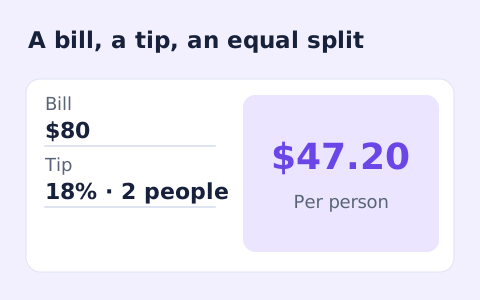
Quickly split a bill with a percentage tip. See the tip amount, total, and per-person amount.
Open toolExplore an educational adult energy estimate from body measurements, an activity factor, and an entered deficit.
Answers about using Calorie Deficit Calculator and understanding its results.
No. It combines a population equation with a rough activity multiplier. A clinician or dietitian can assess personal needs.
The original Mifflin–St Jeor equation uses different coefficients in its female and male forms. Choose the one appropriate for the estimate you want.
The page does not calculate a target below 1,000 kcal/day. That software guard is not a statement that a value above it is suitable for a particular person.
No. It shows an energy calculation under the entered assumptions. It does not predict an individual weight change or a safe dietary plan.