
Hourly to Salary Calculator
Convert hourly pay to gross annual, monthly, and weekly salary using your own working hours and weeks.
Open toolFind an equivalent gross hourly rate from an annual salary, weekly hours, and paid weeks. Keep the schedule visible when comparing figures.
Update the inputs to see your result.
Result will appear here
Annual gross salary is spread across the paid hours in your schedule.
Annual gross salary is divided by weekly hours multiplied by paid weeks. The supporting weekly amount divides salary by paid weeks, while the monthly amount divides salary by twelve.
This is an average gross rate and does not model overtime, taxes, benefits, or variable schedules.

An hourly equivalent needs the annual gross salary and the paid working schedule behind it.
Enter annual gross salary together with hours per week and paid weeks per year. Use positive schedule values and the same basis for each comparison. An after-tax salary would not make a comparable gross hourly equivalent.
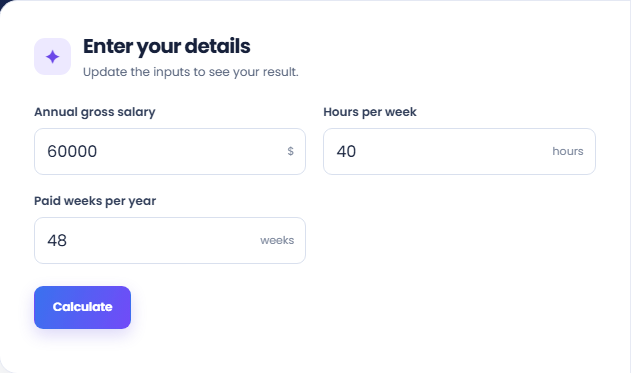
Select Calculate to read the equivalent gross hourly rate. The entered annual amount is spread over the total paid hours in this schedule. The result is an average equivalent and does not establish an employer’s payroll or overtime rules.

Review Gross weekly and Gross monthly alongside the hourly amount. Weekly pay uses paid weeks, while monthly pay averages the annual amount over twelve months. Record the entered schedule when sharing the calculation so the denominator is clear.

Use the same schedule assumptions on both sides of a pay comparison.
Convert a hypothetical salary into an hourly amount using the paid schedule attached to it. Compare that output with a gross hourly offer on an equivalent schedule. Benefits and differences in overtime treatment remain outside the tool's result.

Run the same salary with two weekly hour values to see how the denominator changes. More paid hours spread the annual amount across more time. This comparison helps make the schedule assumption explicit without assigning value to a particular job.

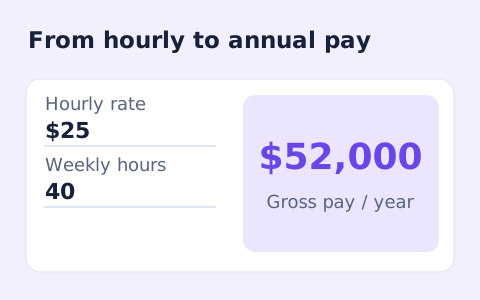
A $52,000 annual salary spread across forty hours and fifty two paid weeks gives $25 per hour. If a quoted rate differs, inspect the hours and weeks used in that quote before assuming the arithmetic is wrong.

Understand which schedule assumptions sit behind the hourly equivalent.
The weekly result uses paid weeks as its denominator, while the monthly amount uses twelve months. Those values describe different averaging periods and should stay attached to their labels when moved into a spreadsheet.
The equivalent hourly rate does not calculate a net paycheck, overtime premium or benefits value. It provides a common gross pay basis for the schedule entered, with currency amounts rounded for display.

Confirm gross pay and paid hours before comparing different offers.
A zero or blank hours or weeks value cannot define an hourly equivalent. Check that the annual salary field contains an annual amount, then enter the intended paid schedule before comparing the output with another rate.
If schedules vary during the year, a single hours per week value is an assumption. Work out the paid hours basis separately and choose inputs that represent it; the form does not accept a dated timesheet or variable weekly schedule.

Convert hourly pay to gross annual, monthly, and weekly salary using your own working hours and weeks.
Open tool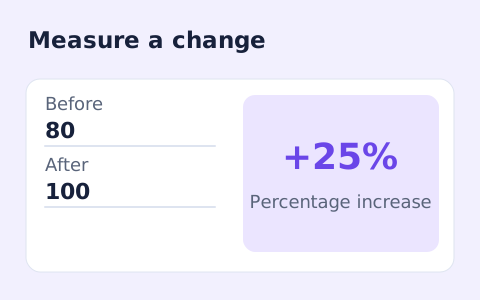
Calculate percentage change and absolute difference between a positive starting value and a new value.
Open tool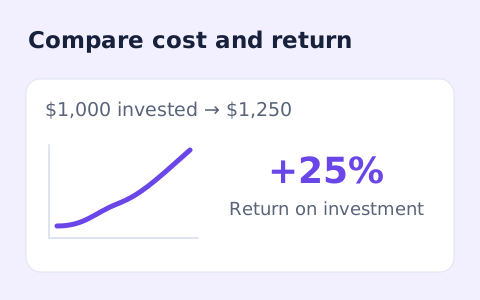
Calculate simple return on investment from the initial cost, final value, additional income, and costs.
Open toolChoose another tool for your next calculation, conversion, or text task.
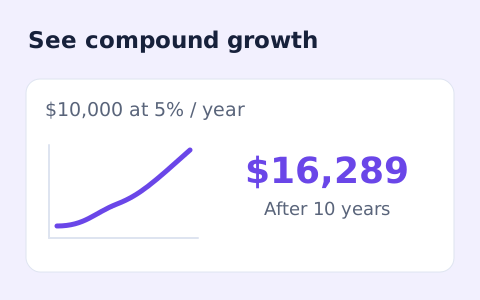
Estimate compound growth from a starting balance, monthly contribution, annual rate, and compound frequency.
Open tool
Estimate loan payoff time and interest savings from regular and extra monthly payments.
Open tool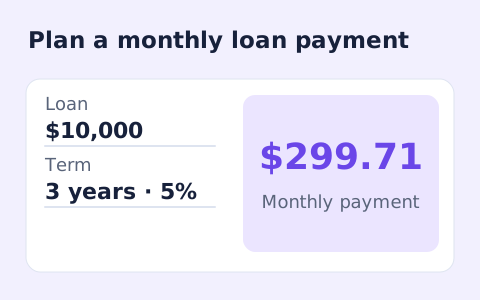
Calculate fixed monthly payments on an amortizing loan using amount, annual rate, and term.
Open tool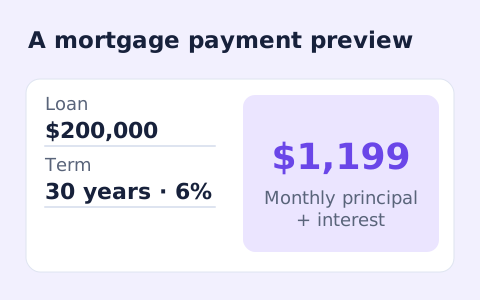
Estimate a monthly mortgage payment with down payment, taxes, insurance, and HOA costs.
Open toolAnswers about using Salary to Hourly Calculator and understanding its results.
Unpaid weeks reduce the number of paid hours used to calculate your equivalent hourly rate.
No. Enter and compare gross pay before deductions.
With the same annual salary, fewer paid hours mean the salary is divided by a smaller total. It is an average equivalent, not a different contracted pay rate.
The form uses one weekly-hours value across the paid weeks. Use a representative average and keep that assumption with the result.
Find an equivalent gross hourly rate from an annual salary, weekly hours, and paid weeks.