
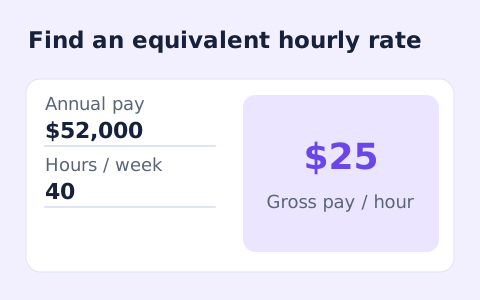
Salary to Hourly Calculator
Convert annual gross salary into an hourly rate from your hours per week and paid weeks per year.
Open toolConvert an hourly rate into gross annual, monthly, and weekly pay using your hours per week and paid weeks per year.
Update the inputs to see your result.
Result will appear here
An hourly rate and paid schedule determine three gross pay equivalents.
The page multiplies hourly rate by weekly hours and paid weeks to estimate annual gross pay. The monthly amount divides that annual total by twelve; weekly gross pay uses rate multiplied by weekly hours.
These are gross amounts before taxes, deductions, overtime, bonuses, or unpaid time off.

Separate the hourly rate, weekly schedule and paid weeks before comparing annual figures.
Enter a gross hourly rate, hours per week, and paid weeks per year. Use the schedule for the scenario you want to compare. Reduce paid weeks if the assumption includes unpaid time, and keep overtime or bonuses separate.

Select Calculate and read the estimated gross annual salary. The calculation applies the same weekly hours across the entered paid weeks. Change one schedule assumption at a time when comparing rates so the reason for a difference stays visible.

Check Gross monthly and Gross weekly with the annual estimate. The monthly figure is an annual average divided by twelve rather than a particular payslip. Keep the rate, hours, and weeks with any amount you record; deductions and benefits are excluded.

The estimate helps compare schedules without mixing hourly, weekly and annual amounts.
Enter one offer, note its annual estimate, then repeat with the other rate and schedule. Different paid hours can change the comparison as much as the hourly rate. Benefits, overtime and deductions need their own review outside this calculation.

Keep the rate and paid weeks fixed while changing hours per week. This isolates the schedule change in the result. Treat it as a hypothetical gross pay comparison rather than a prediction of a future payslip.

At a hypothetical rate of $25, forty hours per week and fifty two paid weeks produce $52,000 annually. The same inputs show $1,000 weekly. This is a useful arithmetic check when an annual figure has been quoted elsewhere.

Keep annual averages and weekly schedules distinct when reading pay periods.
Weekly gross pay uses the entered weekly hours. Monthly gross pay is the annual estimate divided by twelve, so it is an average and does not describe a particular month with a specific number of paydays.
Paid weeks are part of the calculation. A full year assumption and a schedule with unpaid leave can have the same hourly rate but different annual totals. Keep those schedules separate when comparing them.

Check the paid-time assumptions before comparing salary figures.
Hours and paid weeks must be greater than zero. Enter fifty two only when that is the paid schedule you intend to model; the form does not discover holidays, leave arrangements or an employer's payroll calendar.
This result excludes bonuses and overtime premiums. Adding all hours at the ordinary hourly rate would not model a different premium rate. Check those amounts separately before comparing the estimate with an actual annual pay statement.

Convert annual gross salary into an hourly rate from your hours per week and paid weeks per year.
Open tool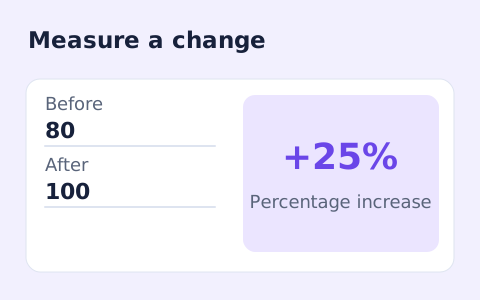
Calculate percentage change and absolute difference between a positive starting value and a new value.
Open tool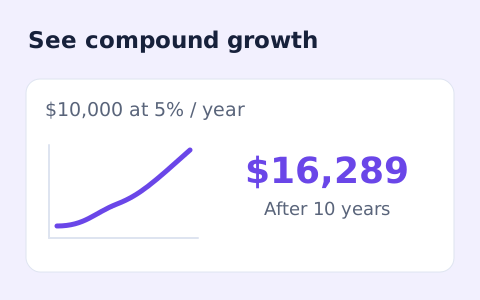
Estimate compound growth from a starting balance, monthly contribution, annual rate, and compound frequency.
Open toolChoose another tool for your next calculation, conversion, or text task.

Estimate loan payoff time and interest savings from regular and extra monthly payments.
Open tool
Calculate fixed monthly payments on an amortizing loan using amount, annual rate, and term.
Open tool
Estimate a monthly mortgage payment with down payment, taxes, insurance, and HOA costs.
Open tool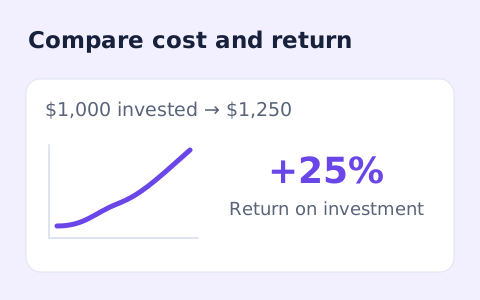
Calculate simple return on investment from the initial cost, final value, additional income, and costs.
Open toolConvert an hourly rate into gross annual, monthly, and weekly pay using your hours per week and paid weeks per year.
Answers about using Hourly to Salary Calculator and understanding its results.
The annual gross amount is divided by 12.
Use 52 if every week is paid. Reduce it for unpaid time off.
Yes. Change hours per week and paid weeks for each schedule, then compare the gross amounts on the same basis.
No. It is an annual average divided by twelve. Actual payday timing, deductions, overtime, and benefits are outside this calculation.