
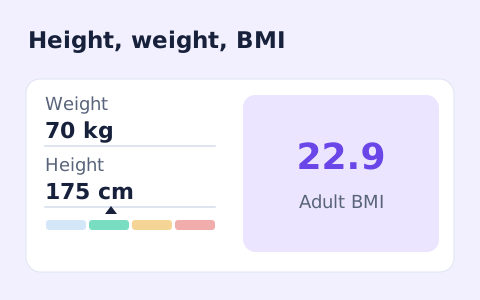
BMI Calculator Online
A free adult BMI calculator with metric inputs, a clear BMI category, and the calculation shown.
Open toolCalculate average running pace per kilometre and per mile from distance and elapsed time. Review the matching speed in kilometres per hour.
Update the inputs to see your result.
Result will appear here
Elapsed seconds are divided by distance in each supported unit.
Hours, minutes, and seconds are combined into elapsed seconds. Distance is converted into kilometres and miles, and time divided by each distance gives the two pace values. Pace display rounds to whole seconds.
Uses elapsed time, including pauses. GPS distance and race course measurements can vary slightly.
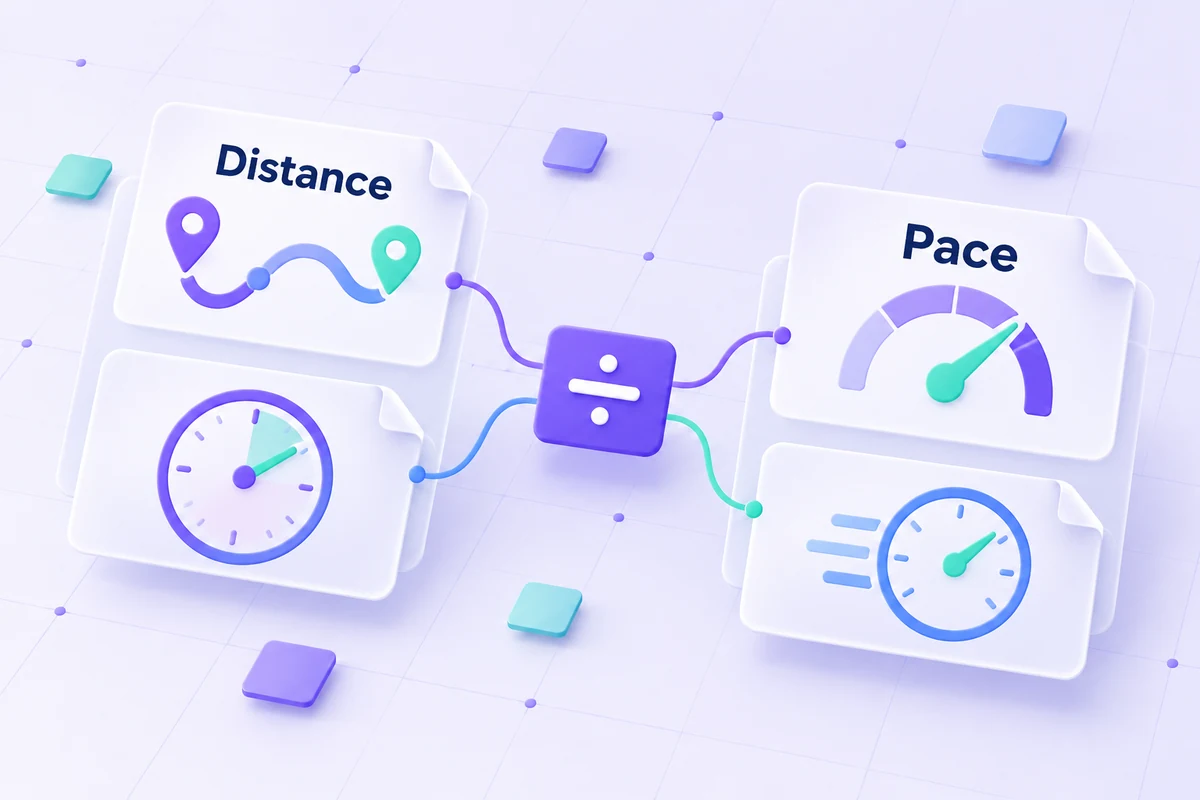
Use one distance unit and the full elapsed time for the run you want to describe.
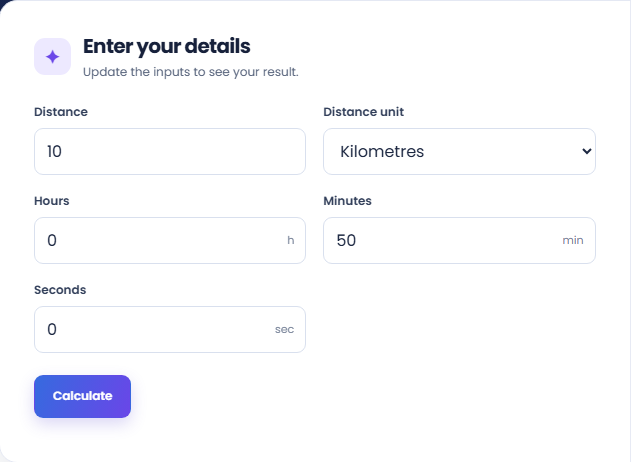
Enter the distance, choose kilometres or miles, and fill hours, minutes, and seconds. Total elapsed time must be greater than zero. Include pauses if you want the result to describe elapsed pace, because the page does not remove stop time.
Select Calculate and read the pace per kilometre. The page combines the time fields into seconds and converts the distance to the required units. The pace display rounds to whole seconds rather than representing split-by-split movement.
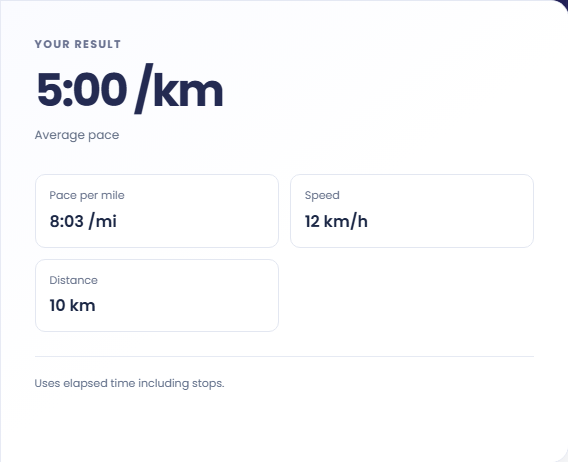
Read Pace per mile, Speed, and Distance beside the main value. They describe the same entered distance and elapsed time. Keep the unit suffix with each result before comparing it with a route record, workout log, or another pace calculation.
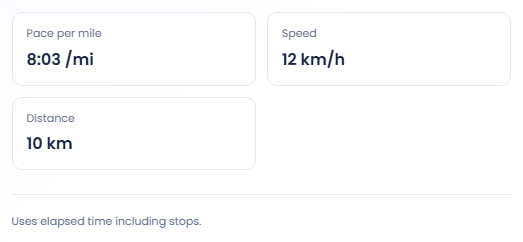
The output describes the whole elapsed interval rather than individual splits.
A hypothetical five kilometre run completed in twenty five minutes has an average pace of five minutes per kilometre. That number describes the full interval. Faster and slower sections can occur within it without changing the meaning of the average.

Enter a measured distance and time, then use the per mile and per kilometre outputs to compare records written in different units. This avoids comparing two bare pace numbers that refer to different distance lengths.

Calculate with the elapsed time recorded for the whole outing. If another record uses moving time, enter that time in a separate run and label it clearly. The form cannot determine which pauses a watch removed from its moving time.

Read time-per-distance pace separately from distance-per-time speed.
Pace is displayed as minutes and seconds per distance unit, while speed is kilometres per hour. A smaller pace duration corresponds to a higher average speed for the same measurement basis. The displayed pace is rounded to whole seconds.
The result is an average over the distance entered. It does not provide split times, elevation adjustments or a prediction of another race. GPS distance and measured course distance can give slightly different averages.

Check distance units and whether the elapsed time includes stops.
Review the selected distance unit whenever a pace differs from another record. Entering minutes into the hours field changes the total time substantially. Confirm that the hours, minutes and seconds together describe the intended interval.
A zero total time cannot produce a pace. For an outing with pauses, decide which time basis to compare and label it. The calculator uses every entered second and does not decide whether a pause belongs in the measurement.

A free adult BMI calculator with metric inputs, a clear BMI category, and the calculation shown.
Open tool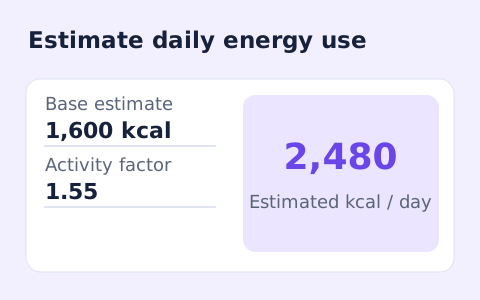
Estimate resting energy expenditure and TDEE using the Mifflin–St Jeor equation and an activity factor.
Open tool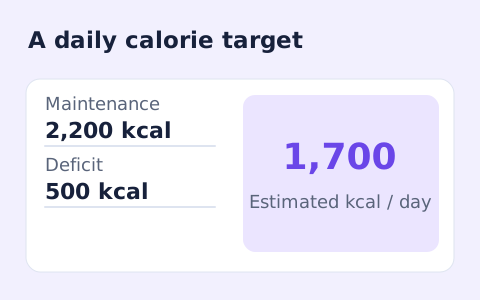
Estimate adult TDEE and a daily calorie target using body measurements, activity, and a chosen deficit.
Open toolChoose another tool for your next calculation, conversion, or text task.
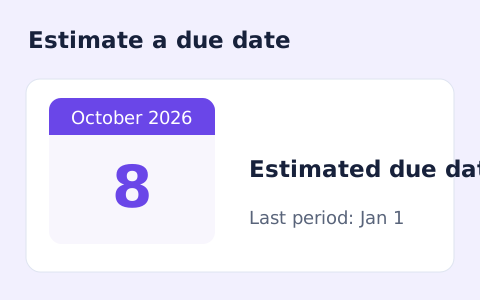
Estimate a pregnancy due date using the first day of the last menstrual period and cycle length.
Open tool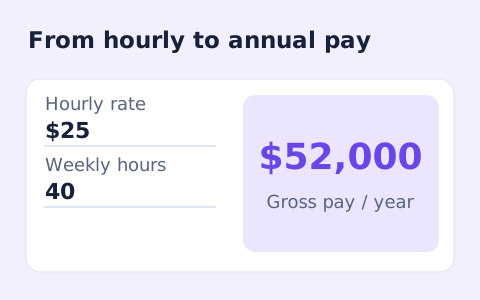
Convert hourly pay to gross annual, monthly, and weekly salary using your own working hours and weeks.
Open tool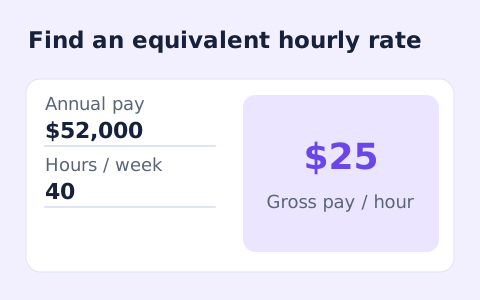
Convert annual gross salary into an hourly rate from your hours per week and paid weeks per year.
Open tool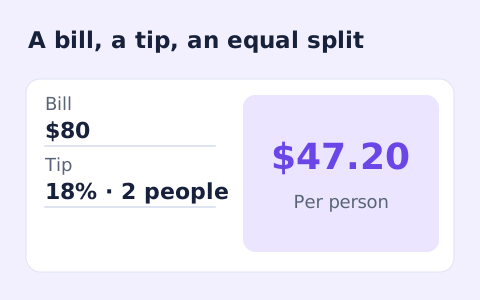
Quickly split a bill with a percentage tip. See the tip amount, total, and per-person amount.
Open toolCalculate average running pace per kilometre and per mile from distance and elapsed time.
Answers about using Running Pace Calculator and understanding its results.
It means five minutes for each kilometre at that average pace.
Pace is time per distance; speed is distance per time. Both are shown.
This form takes an elapsed time and distance to calculate average pace. It does not include a separate predicted-finish-time input.
Include stops in the elapsed time if you want elapsed pace. The page does not remove pause time automatically.