
OBJ to STL Converter
A binary STL triangle mesh. Read OBJ vertices and triangular or convex planar faces, calculate normals and write binary STL.
Open toolDecode OGG/Vorbis or supported OGG/Opus, resample to 44.1 kHz and encode MP3 samples. Browser codec support varies.
Enter the inputs, then select Encode MP3.
Result will appear here
Decode OGG/Vorbis or supported OGG/Opus, resample to 44.1 kHz and encode MP3 samples.
The tool processes the supplied input with browser APIs and bundled local libraries.
Supply supported input and review the result.
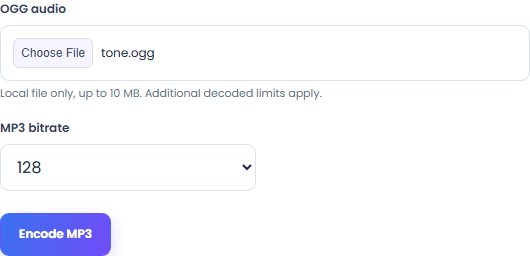
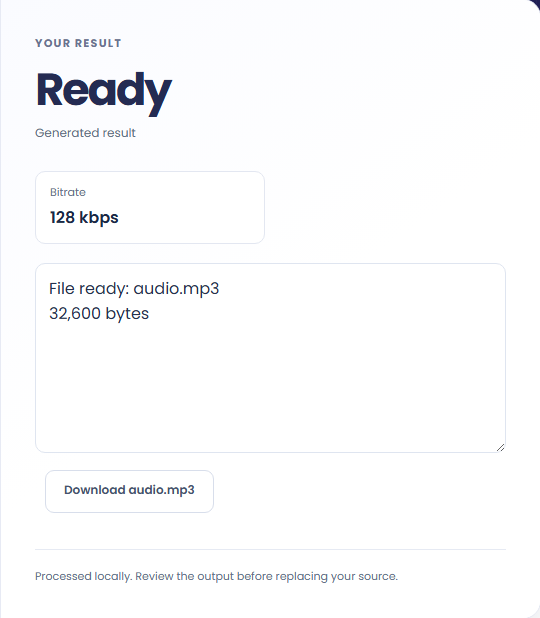
Save an MP3 made from browser-decodable OGG audio. Check the download in its target application before replacing your source.
Use an OGG file supported by your browser decoder. The output is encoded at the chosen MP3 bitrate.
OGG to MP3 re-encodes decoded samples. Keep the original when avoiding further quality loss matters.
Vorbis and Opus availability varies by browser. An unsupported source returns a decoding error.
Review the format and conversion policy.
An MP3 made from browser-decodable OGG audio. Browser codec support varies. Up to 120 seconds and two channels. This is a second lossy encoding and can reduce quality; metadata is omitted.
Keep the original while checking the saved output. The result reflects the input and settings you supplied.
Check these conditions before converting.
Browser codec support varies. Up to 120 seconds and two channels. This is a second lossy encoding and can reduce quality; metadata is omitted.
The page does not keep inputs or results after leaving. Keep the source and save the output you need.
A binary STL triangle mesh. Read OBJ vertices and triangular or convex planar faces, calculate normals and write binary STL.
Open tool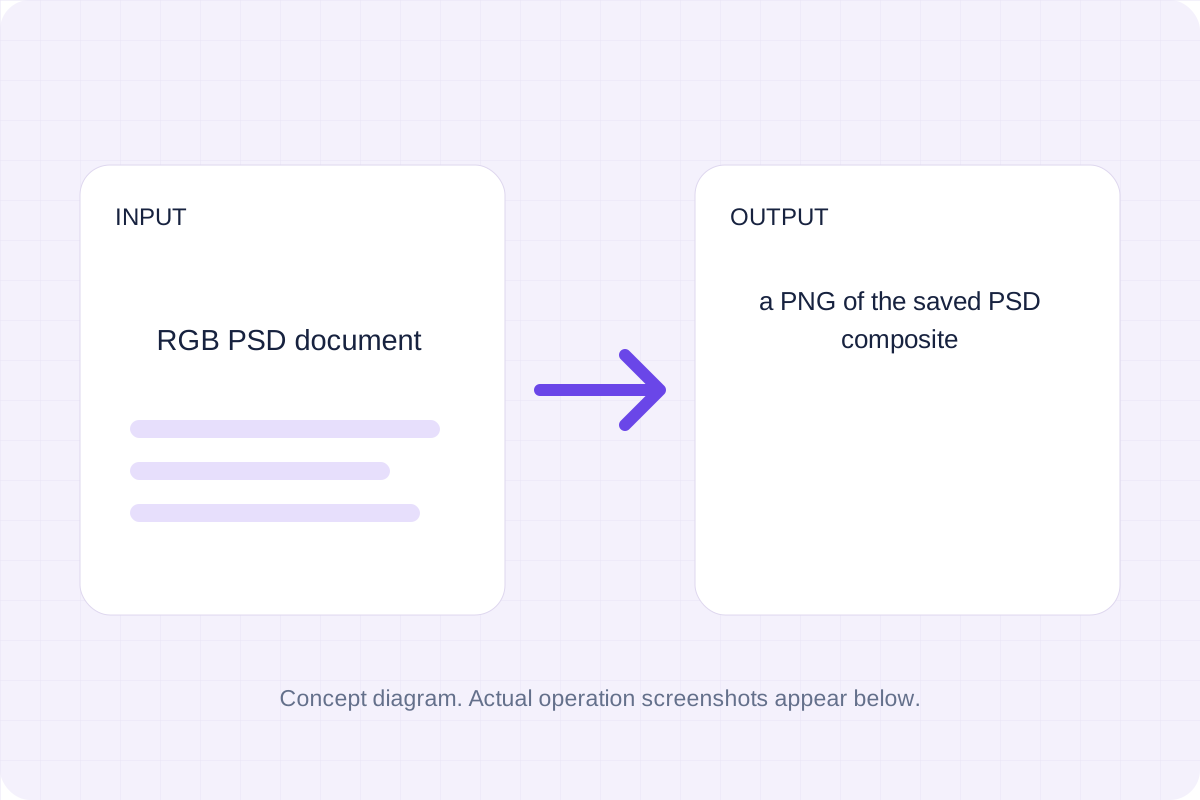
A PNG of the saved PSD composite. Decode the embedded RGB composite of a local PSD and export its pixels.
Open tool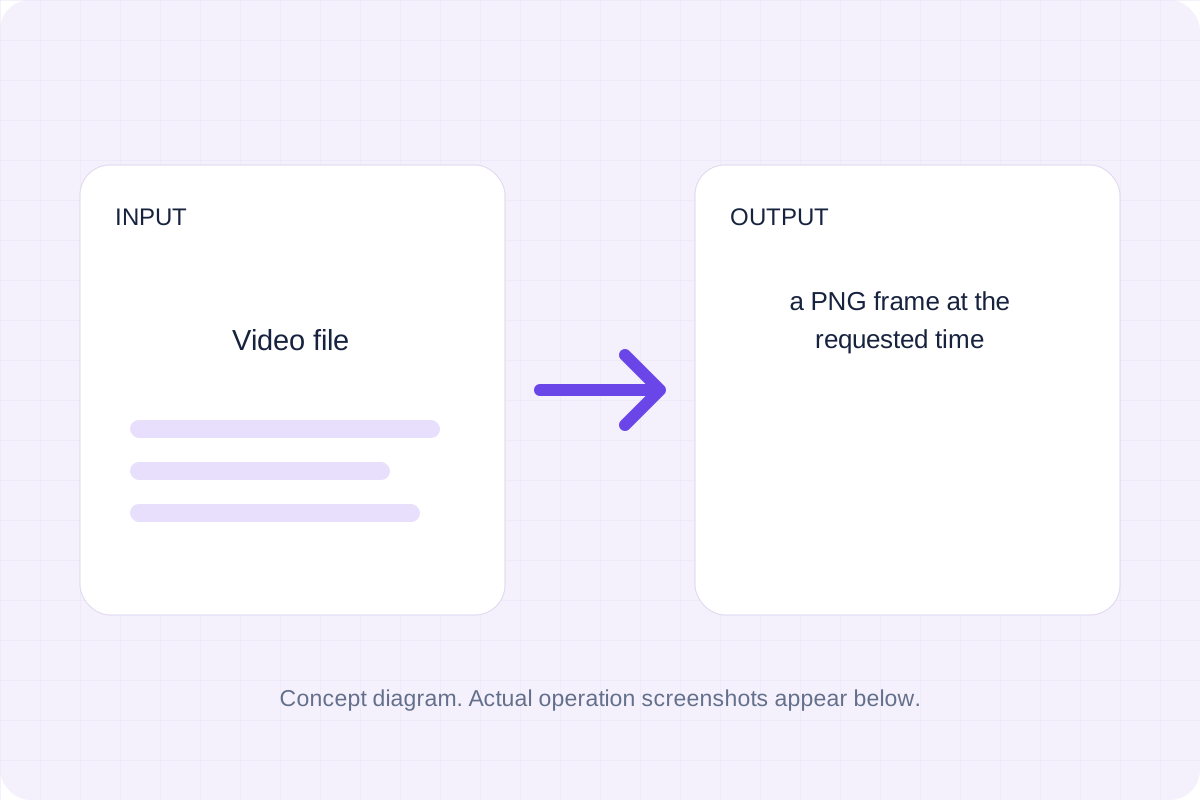
A PNG frame at the requested time. Seek a browser-decodable local video and draw its frame onto a canvas.
Open toolChoose another tool for your next calculation, conversion, or text task.
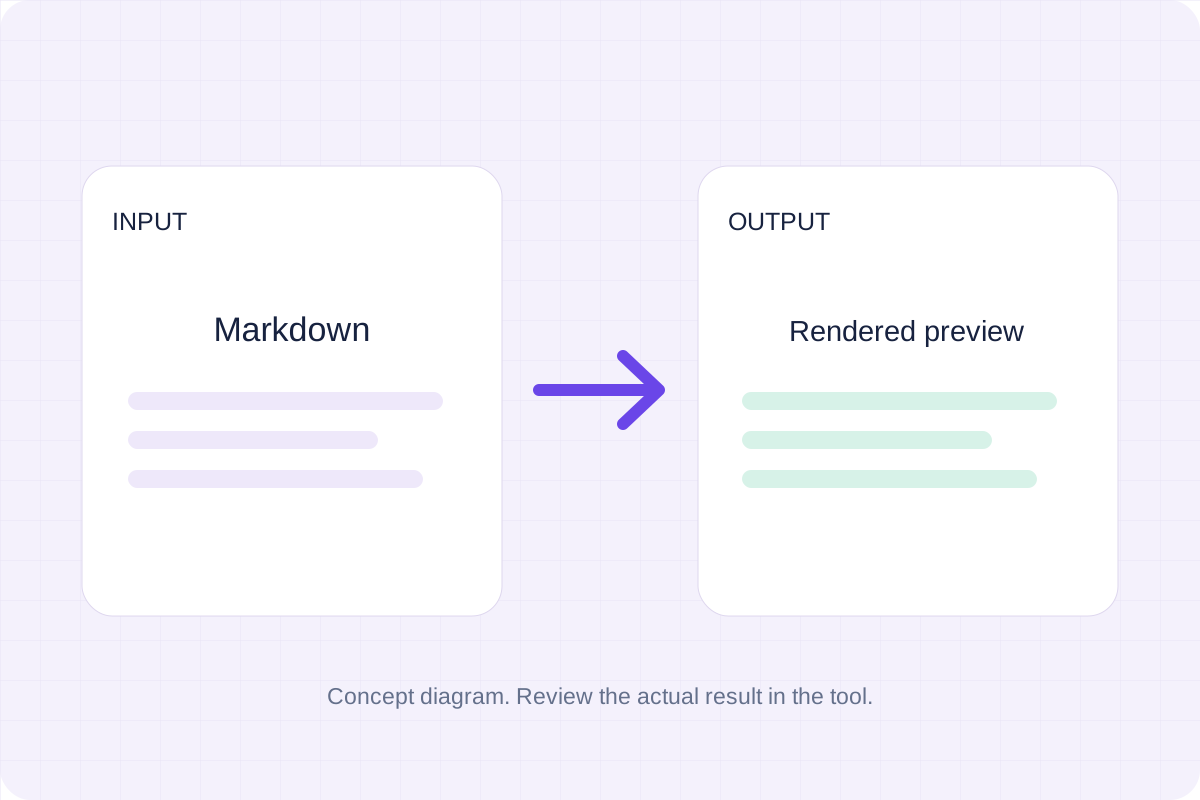
Write Markdown, update the rendered preview and download the Markdown or HTML when it is ready.
Open tool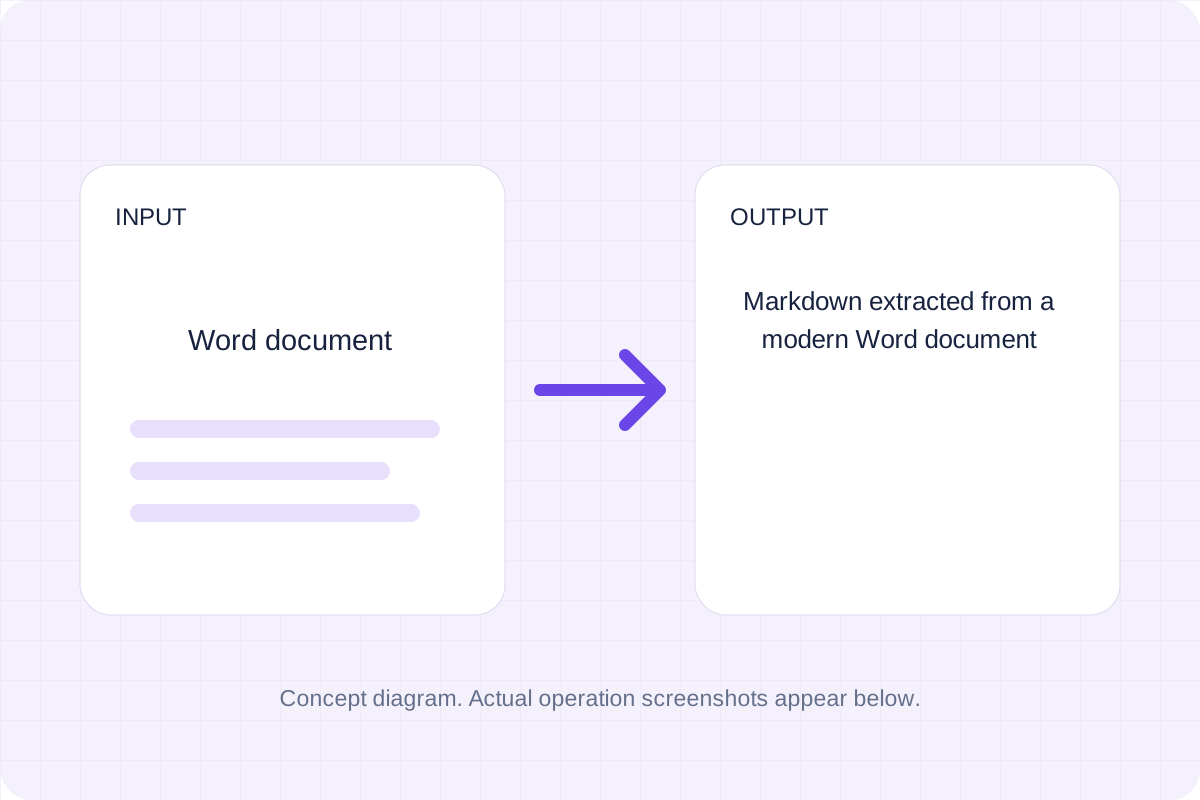
Convert a modern .docx document to Markdown. Keep common text, headings, links and lists while leaving images, page layout and complex formatting for manual editing.
Open tool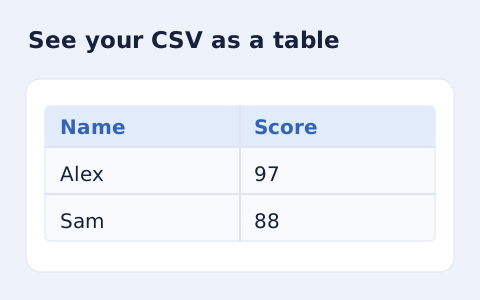
Inspect quoted CSV cells in a readable table without uploading your data.
Open tool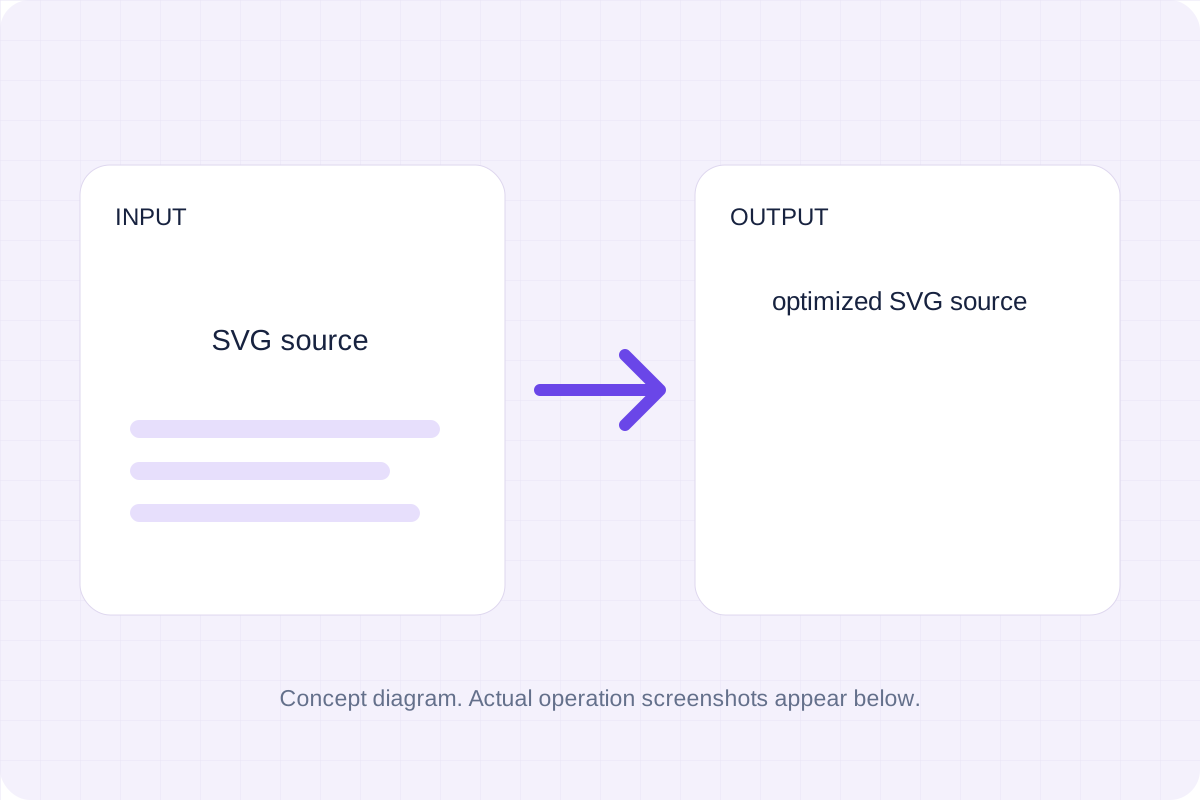
Optimize self-contained SVG source with local SVGO processing. Choose decimal precision, download the smaller markup and compare its appearance with the original.
Open toolReview the supported output and save your result.
Answers about using OGG to MP3 converter and understanding its results.
Save an MP3 made from browser-decodable OGG audio. Browser codec support varies. Up to 120 seconds and two channels. This is a second lossy encoding and can reduce quality; metadata is omitted.
No. Processing uses browser APIs and bundled local libraries. The selected file or entered source is not sent to a conversion server. Save the result before leaving.