Dice Probability Calculator
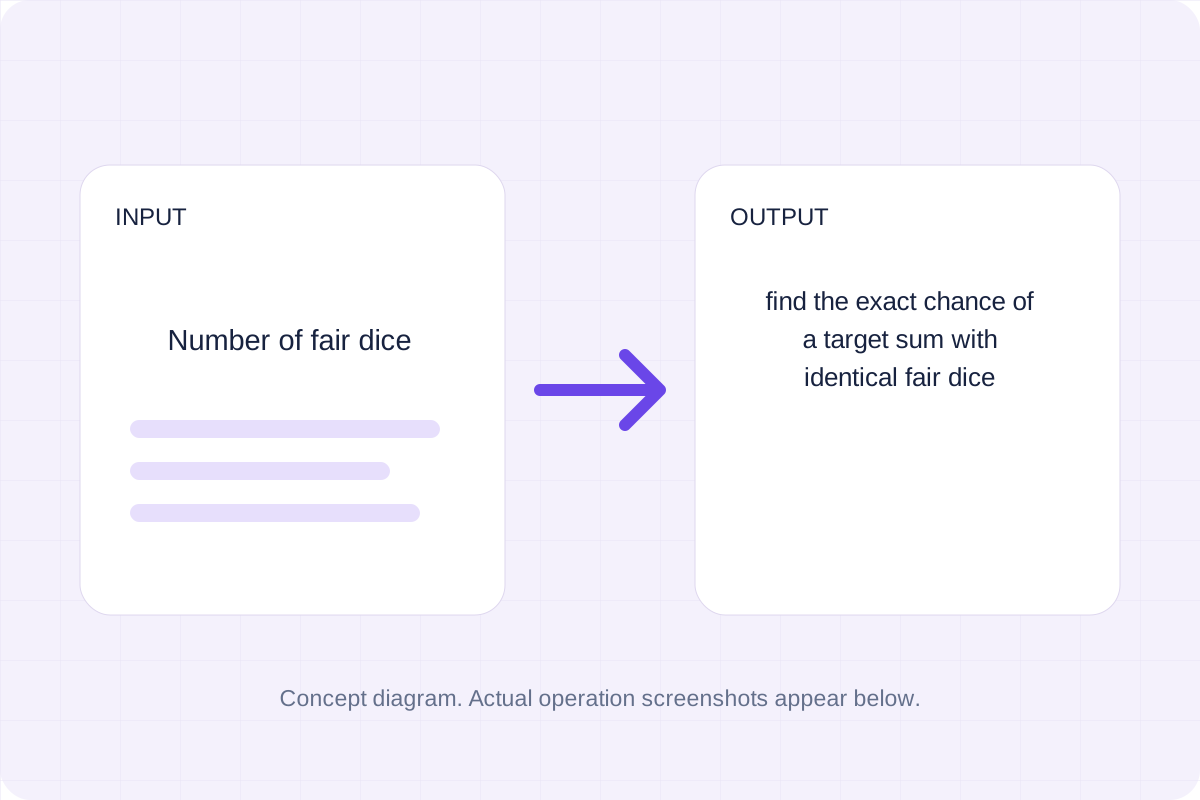
Find the exact chance of a target sum with identical fair dice.
Open toolFind event probability from equally likely outcome counts. Whole counts only, with favorable outcomes no greater than the positive total.
Enter the inputs, then select Calculate result.
Result will appear here
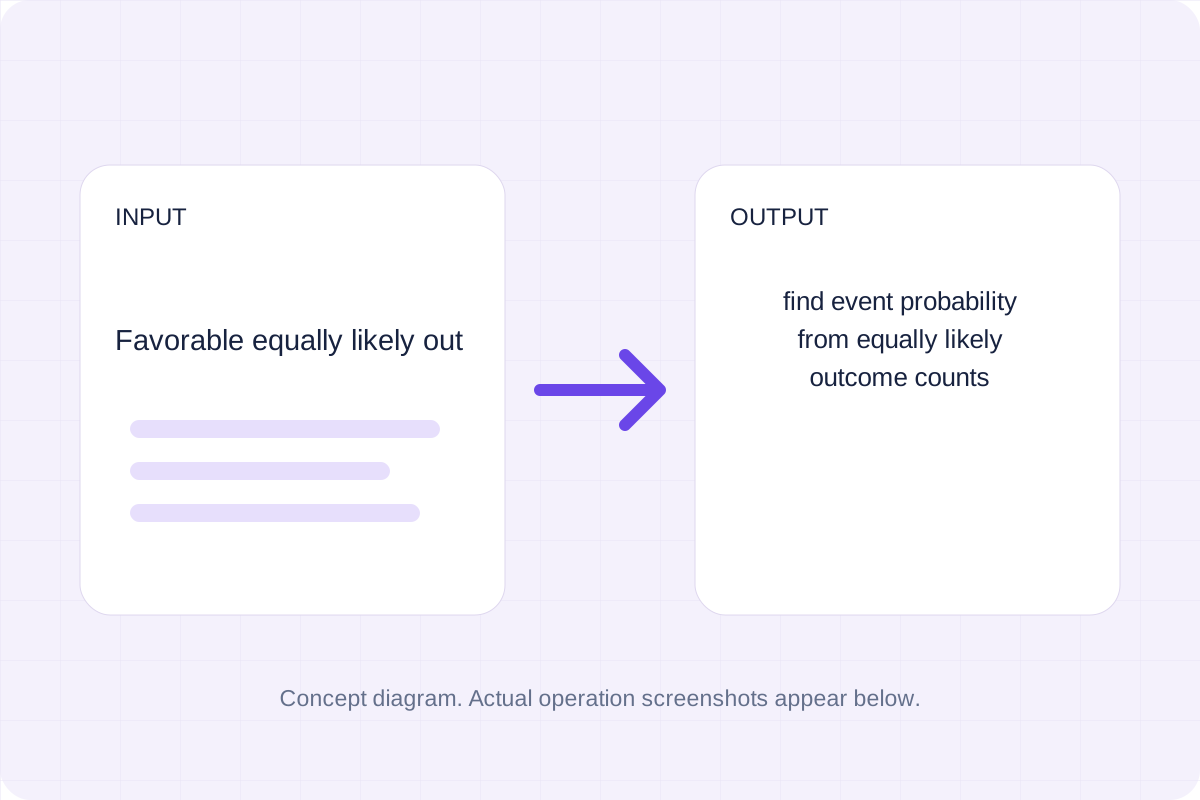
Find event probability from equally likely outcome counts.
Whole counts only, with favorable outcomes no greater than the positive total. This assumes every outcome is equally likely; no prediction from real-world data.
Follow the labelled inputs.
Replace the example with favorable equally likely outcomes. The field labels specify the expected format and units.
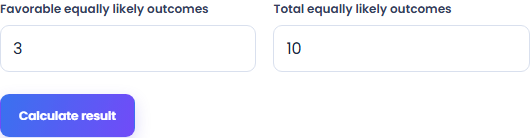
Set total equally likely outcomes. Whole counts only, with favorable outcomes no greater than the positive total.
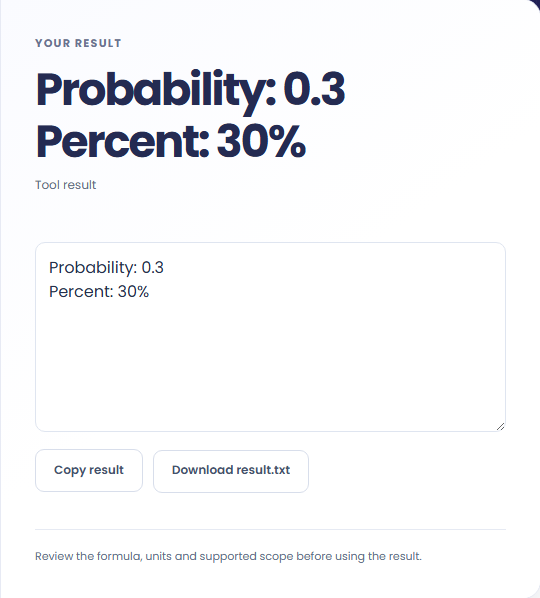
Select Calculate result. Review the calculated result, then copy it or download the result text.
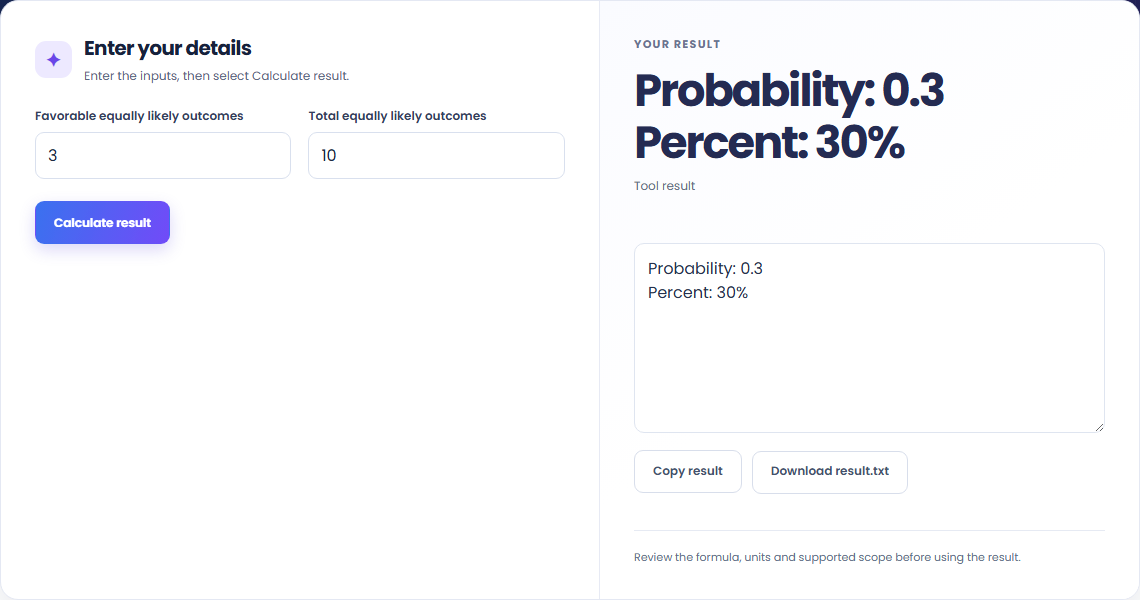
The starting example produces Probability: 0.3; Percent: 30%. Find event probability from equally likely outcome counts.

Read the labels for favorable equally likely outcomes and total equally likely outcomes. Whole counts only, with favorable outcomes no greater than the positive total.

Copy the calculated result into your notes. Keep the formula and assumptions with it if someone else needs to reproduce the calculation.

Read the units and assumptions with the output.
Find event probability from equally likely outcome counts.
Whole counts only, with favorable outcomes no greater than the positive total. This assumes every outcome is equally likely; no prediction from real-world data.

Check the stated scope before you run it.
Whole counts only, with favorable outcomes no greater than the positive total. This assumes every outcome is equally likely; no prediction from real-world data.
The input stays in this browser. Copy result and Download save the same displayed text.

Choose another tool for your next calculation, conversion, or text task.
Calculate the nth term and finite sum of an arithmetic sequence.
Open tool
Calculate the probability of exactly k binomial successes.
Open tool
Area = π × radius².
Open tool
Circumference = 2 × π × radius.
Open toolAnswers about using Probability Calculator and understanding its results.
Whole counts only, with favorable outcomes no greater than the positive total. This assumes every outcome is equally likely; no prediction from real-world data.
Yes. Copy result copies the displayed text, and Download saves the same result as a text file. Calculations run in your browser without an account.
Check the calculated result, then copy or download it.