Angular Acceleration Calculator
Average angular acceleration = change in angular velocity / time.
Open toolFind electrical conductance as reciprocal resistance. Positive real resistance; this does not compute complex admittance.
Enter the inputs, then select Calculate.
Result will appear here
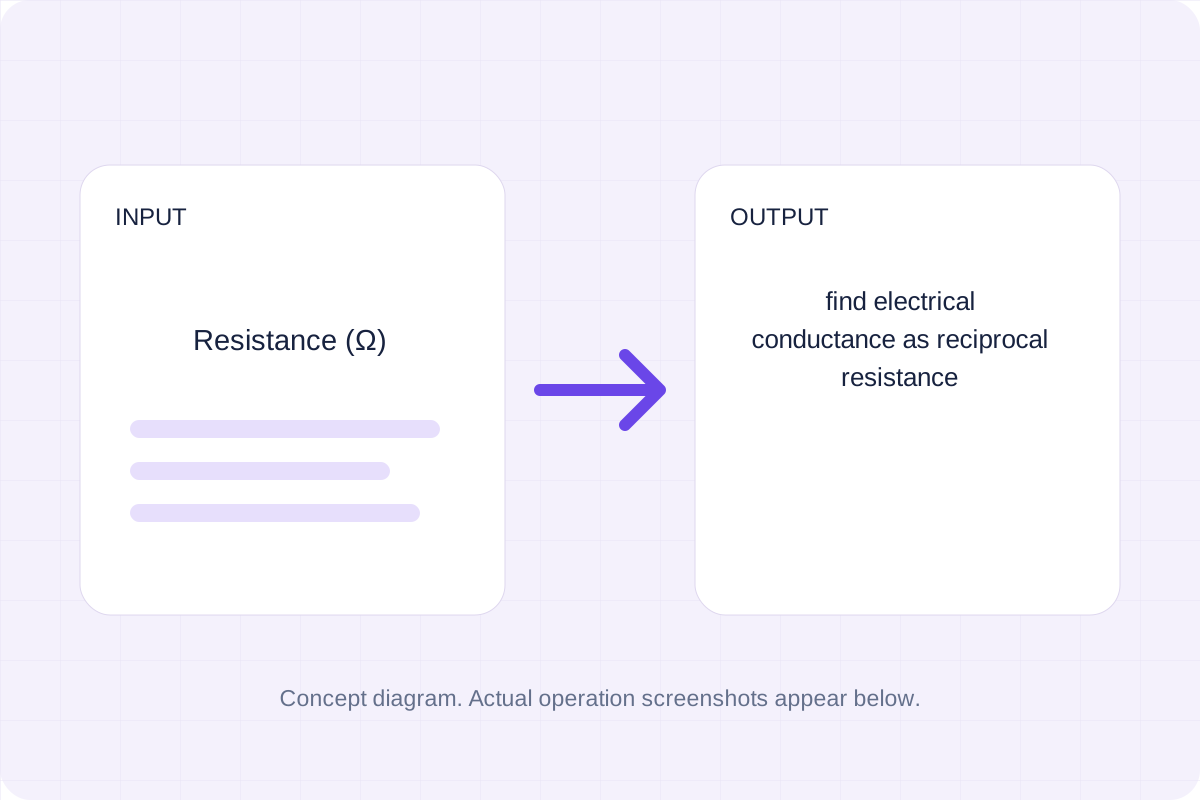
Find electrical conductance as reciprocal resistance.
Positive real resistance; this does not compute complex admittance. Inputs and results use floating-point numbers and may be rounded. Results show up to 12 significant digits.
Follow the labelled inputs.
Replace the example with resistance (ω). The field labels specify the expected format and units.
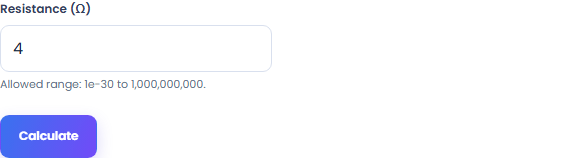
This tool uses one input. Check the supported range before running it. Positive real resistance; this does not compute complex admittance.
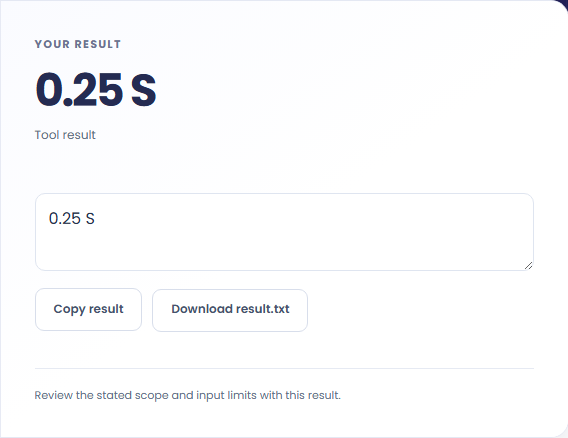
Select Calculate. Review the calculated result, then copy it or download the result text.
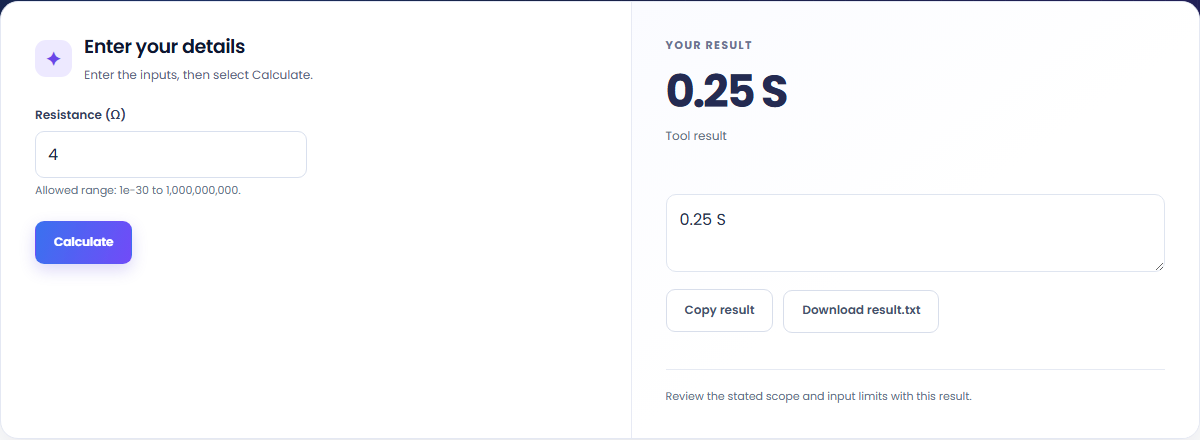
The starting example produces 0.25 S. Find electrical conductance as reciprocal resistance.

Read the labels for resistance (ω). Positive real resistance; this does not compute complex admittance.

Copy the calculated result into your notes. Keep the formula and assumptions with it if someone else needs to reproduce the calculation.

Read the units and assumptions with the output.
Find electrical conductance as reciprocal resistance.
Positive real resistance; this does not compute complex admittance. Inputs and results use floating-point numbers and may be rounded. Results show up to 12 significant digits.

Check the stated scope before you run it.
Positive real resistance; this does not compute complex admittance. Inputs and results use floating-point numbers and may be rounded. Results show up to 12 significant digits.
The input stays in this browser. Copy result and Download save the same displayed text.

Choose another tool for your next calculation, conversion, or text task.
Convert areal density between listed units.
Open tool
Find ideal capacitive reactance magnitude as 1/(2πfC).
Open tool
Find circle chord length as 2r sin(θ/2).
Open tool
Find minor circular segment area as r²(θ − sin θ)/2.
Open toolAnswers about using Conductance Calculator and understanding its results.
Positive real resistance; this does not compute complex admittance. Inputs and results use floating-point numbers and may be rounded. Results show up to 12 significant digits.
Copy result copies the displayed text. Download saves the same text as a TXT file. Processing runs in this browser without an account.
Check the calculated result, then copy or download it.